Castle Park was the focus of a major heritage and public realm transformation led by East Herts Council and Bishop’s Stortford Town Council, with support from the National Lottery Heritage Fund and project management by Hertfordshire County Council Countryside Management Service. The ambition was to reimagine the park as a vibrant community destination that celebrated its rich medieval history, riverside setting and biodiversity while making the space more welcoming, accessible and engaging for visitors of all ages.
Fitzpatrick Woolmer was appointed to design, produce and deliver a complete interpretation and wayfinding scheme across the entire park, helping to reconnect people with the stories, landscapes and heritage that make Castle Park so distinctive.
The brief
The project aimed to create a visitor experience that would encourage exploration, improve understanding of the park’s heritage and strengthen the connection between the community and the landscape around them. The interpretation needed to balance historical accuracy with accessibility, presenting layers of archaeological, ecological and cultural information in a way that felt engaging, inclusive and easy to navigate.
Working closely with archaeologists, local historians, the Friends of Castle Park and the wider project team, we carried out extensive site surveys and research to shape a visitor experience rooted in both storytelling and place. The scheme needed to appeal equally to families, local residents, school groups and visitors discovering the park for the first time.
Working closely with archaeologists, local historians, the Friends of Castle Park and the wider project team, we carried out extensive site surveys and research to shape a visitor experience rooted in both storytelling and place. The scheme needed to appeal equally to families, local residents, school groups and visitors discovering the park for the first time.
Design principles
At the heart of the project was a desire to make Castle Park’s stories feel vivid, immersive and accessible. Rather than relying on traditional interpretation alone, the creative approach combined historically informed storytelling with rich visual content designed to spark curiosity and encourage exploration throughout the site.
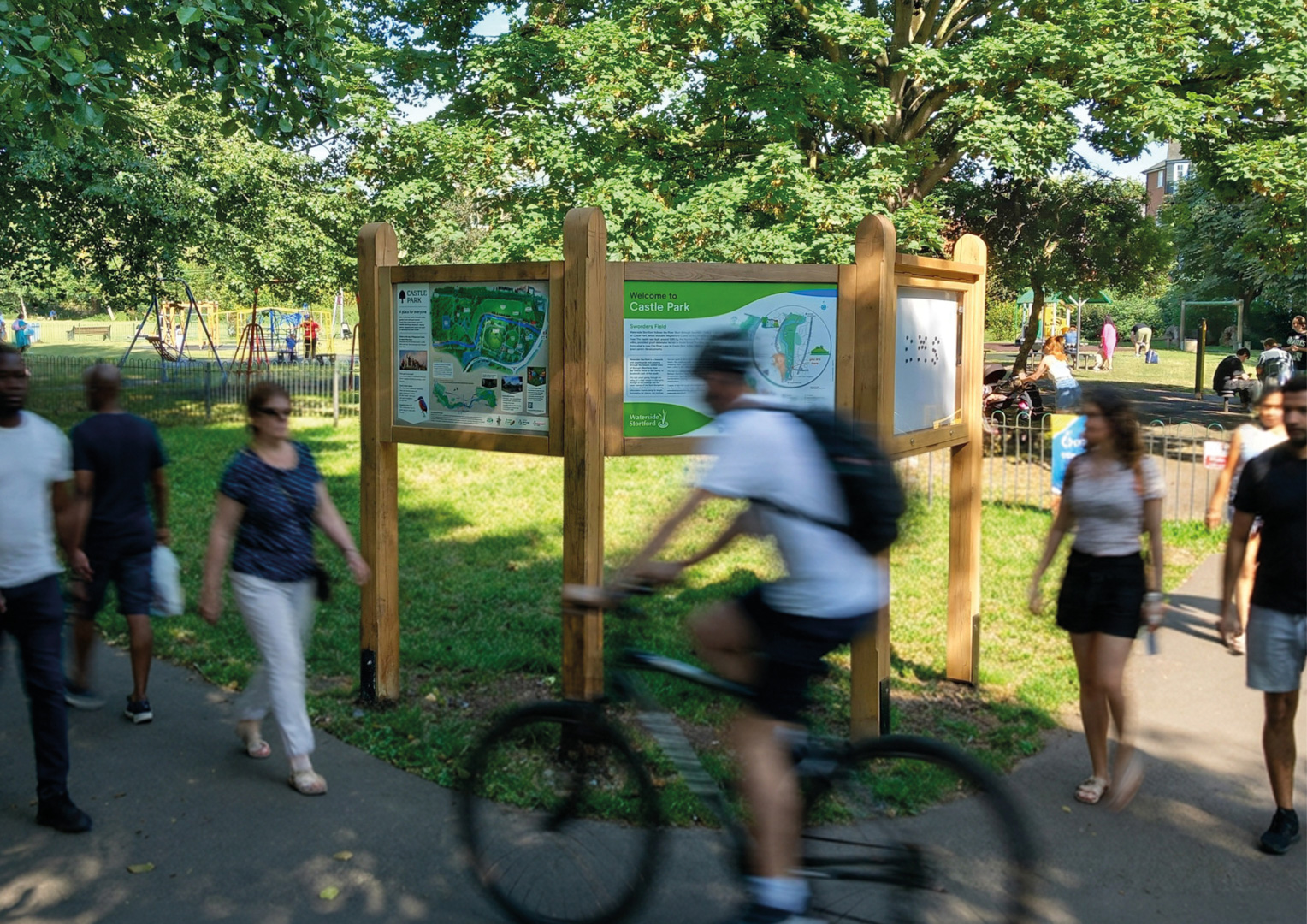
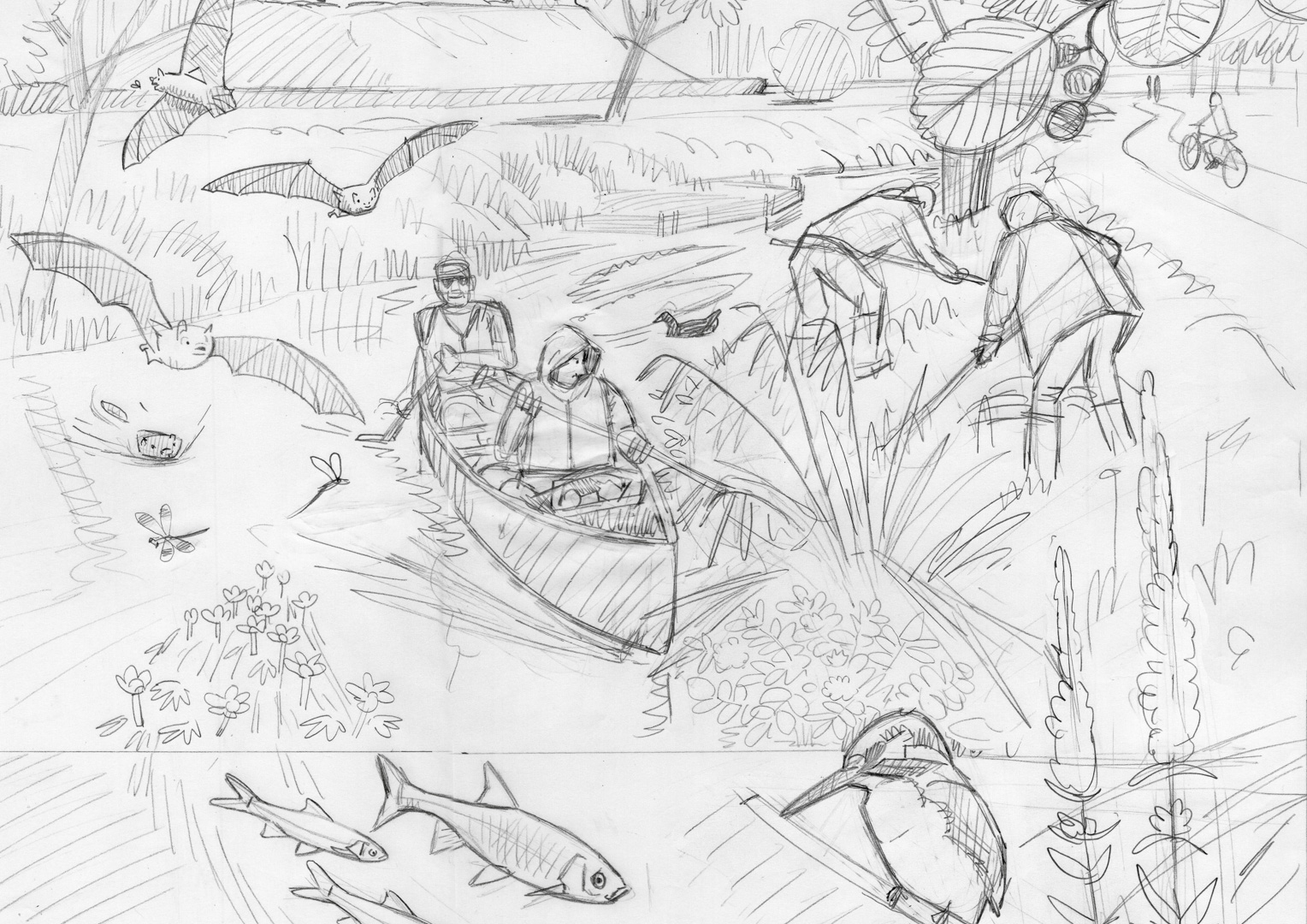
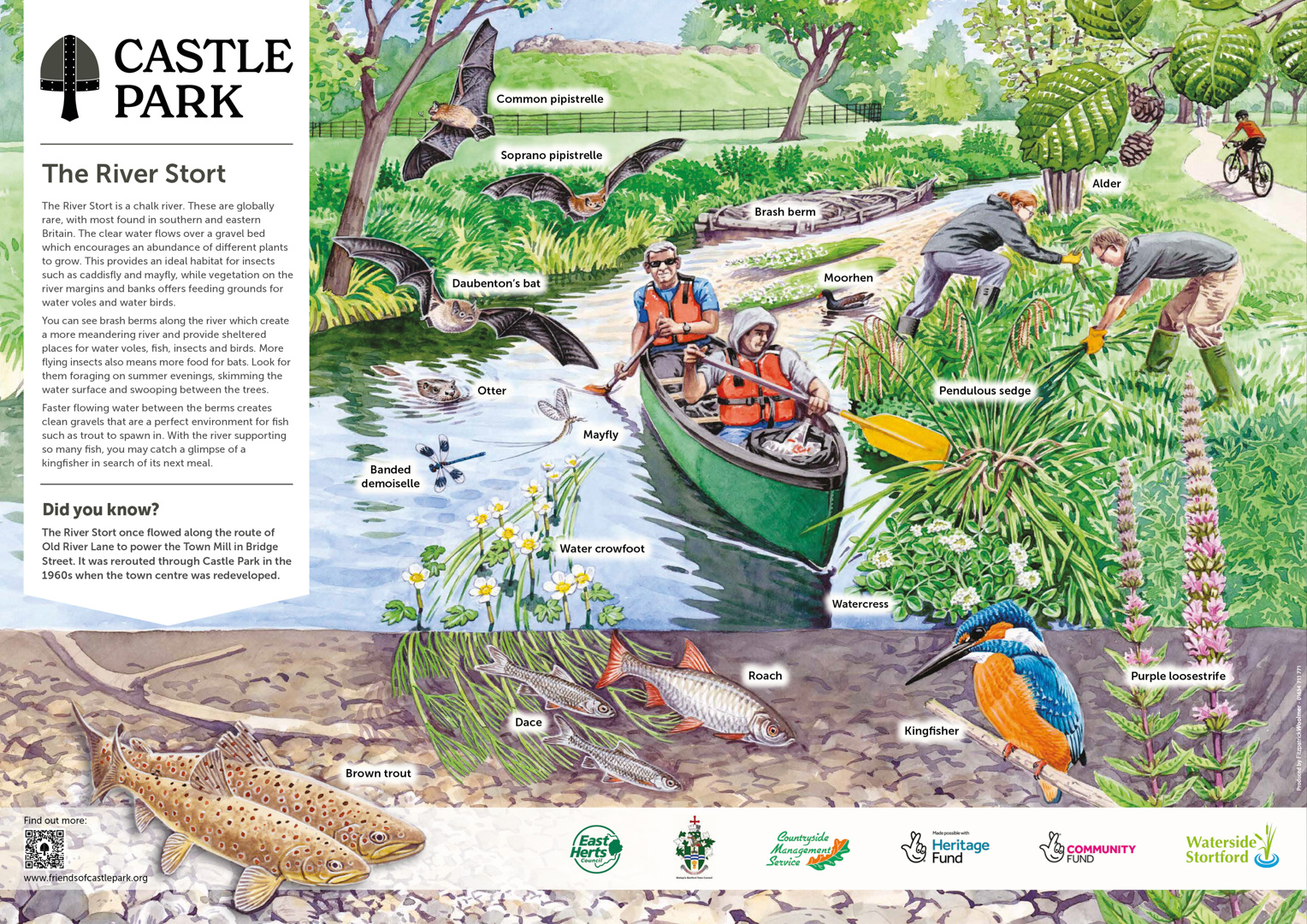
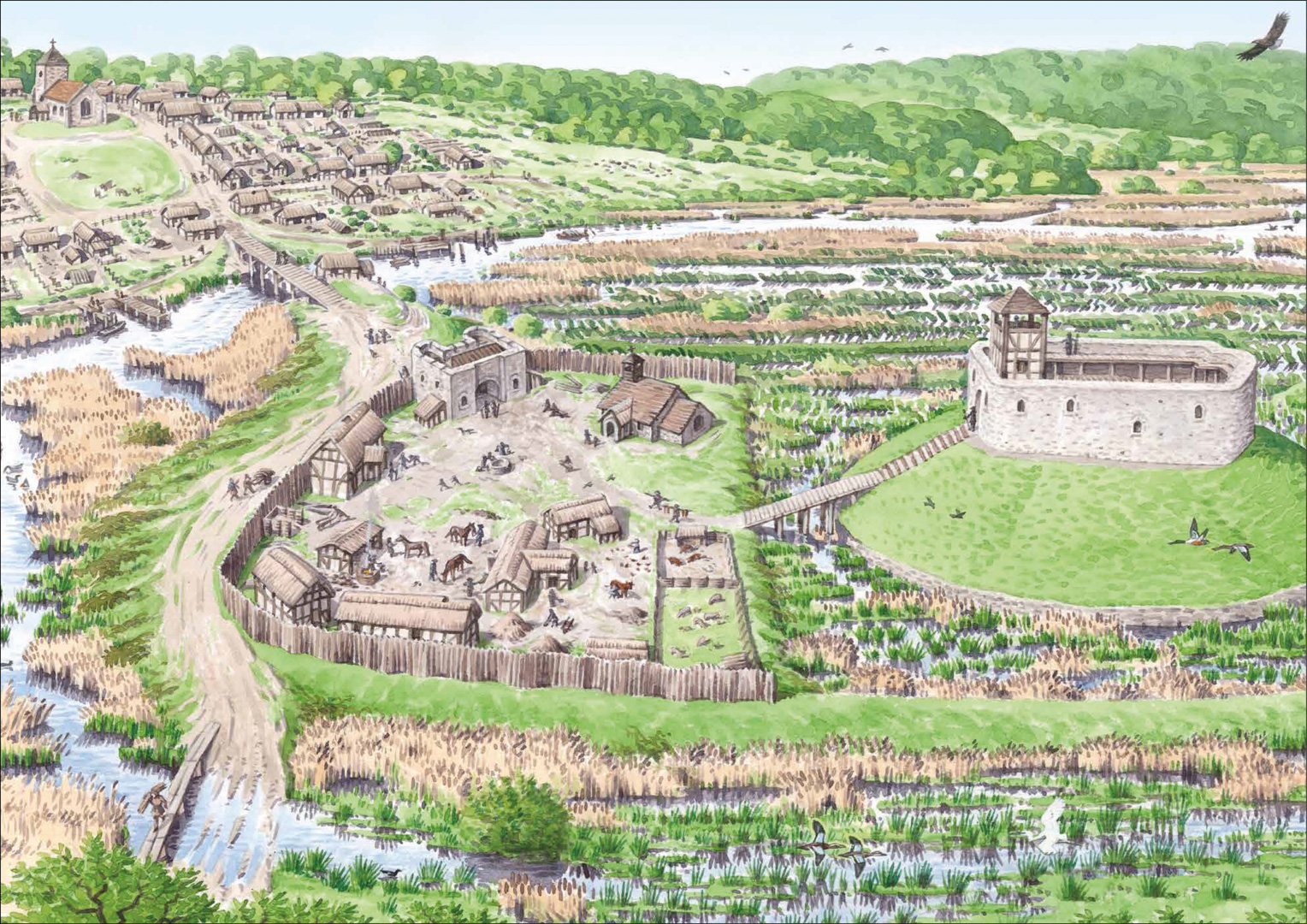
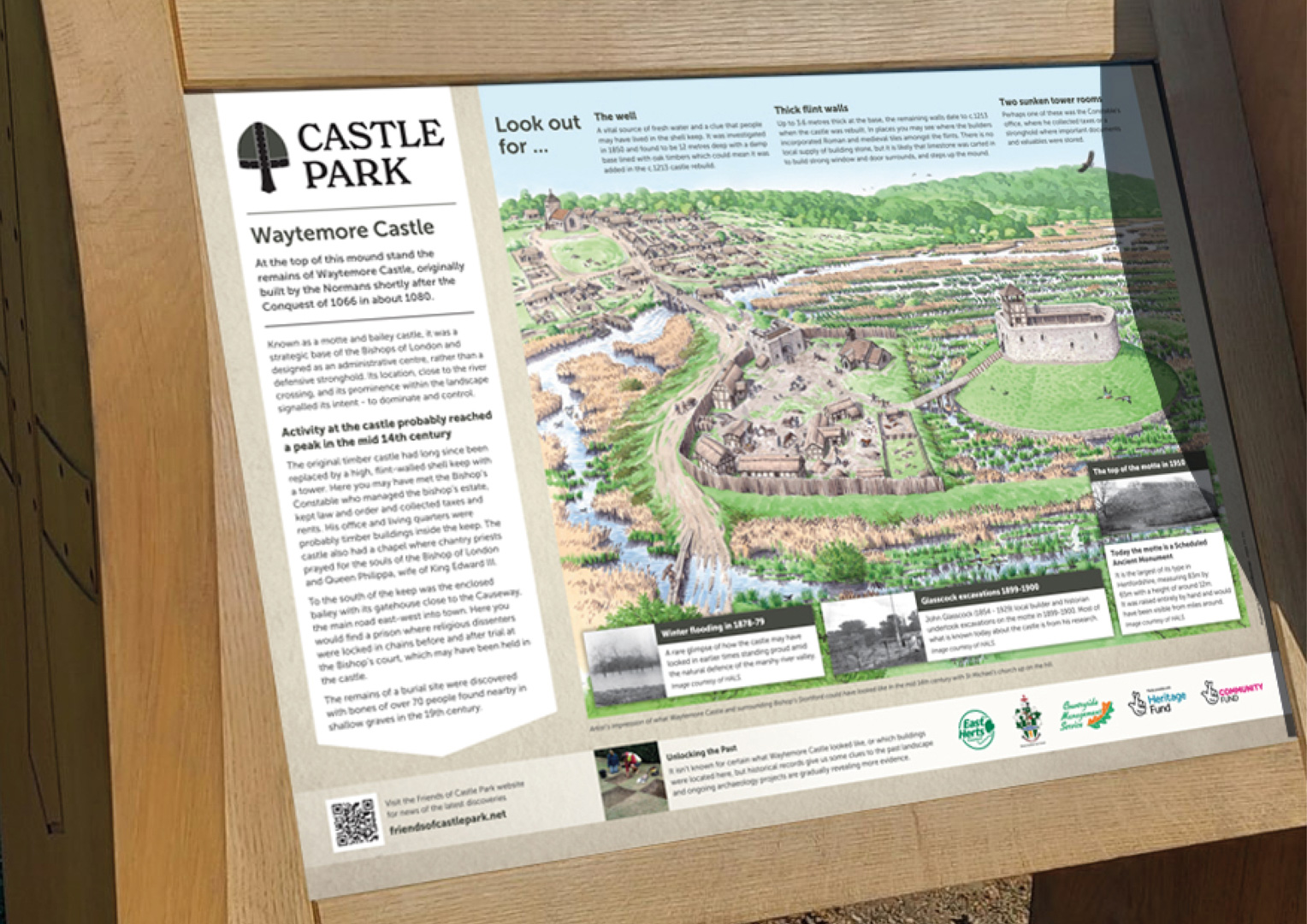
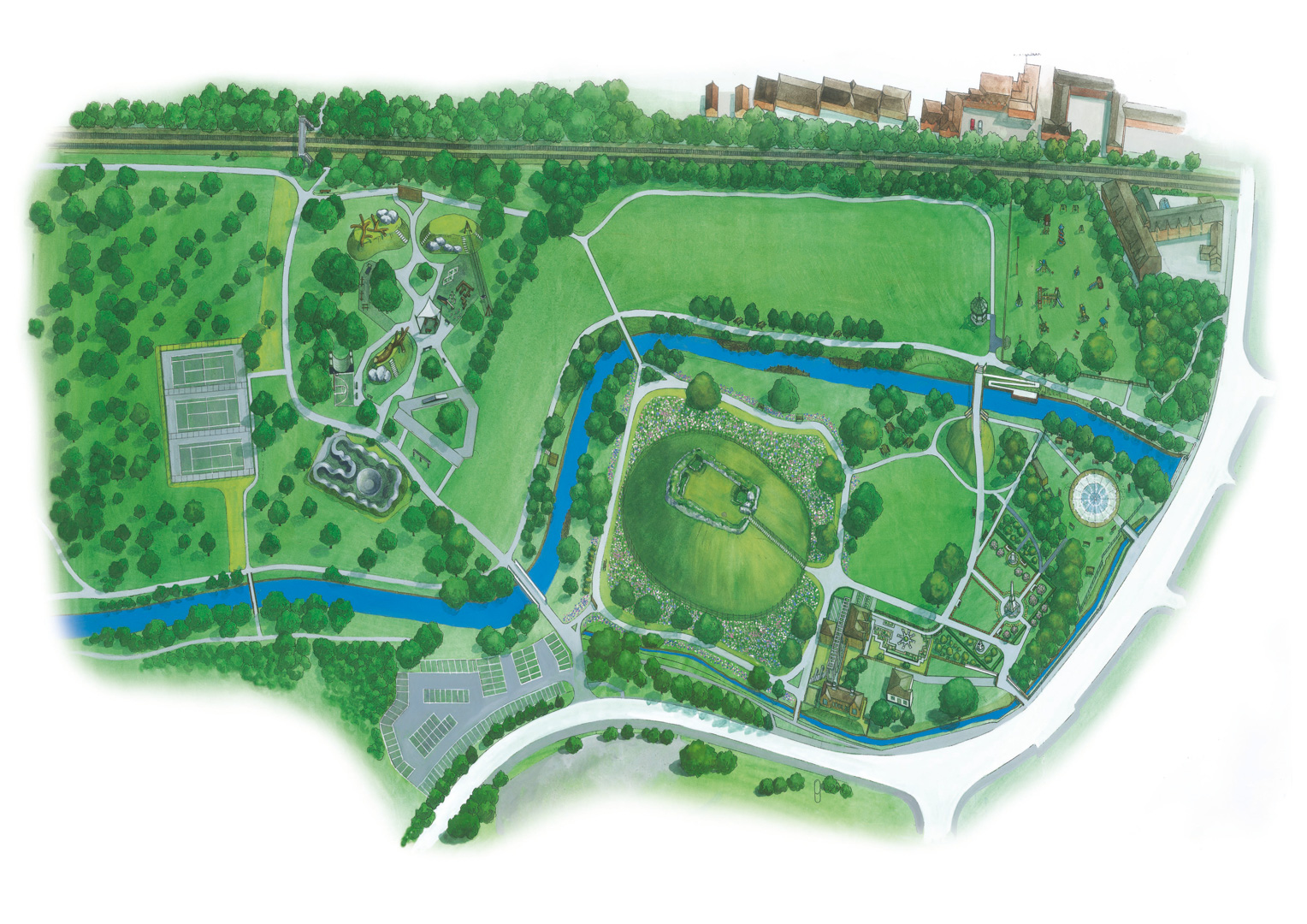
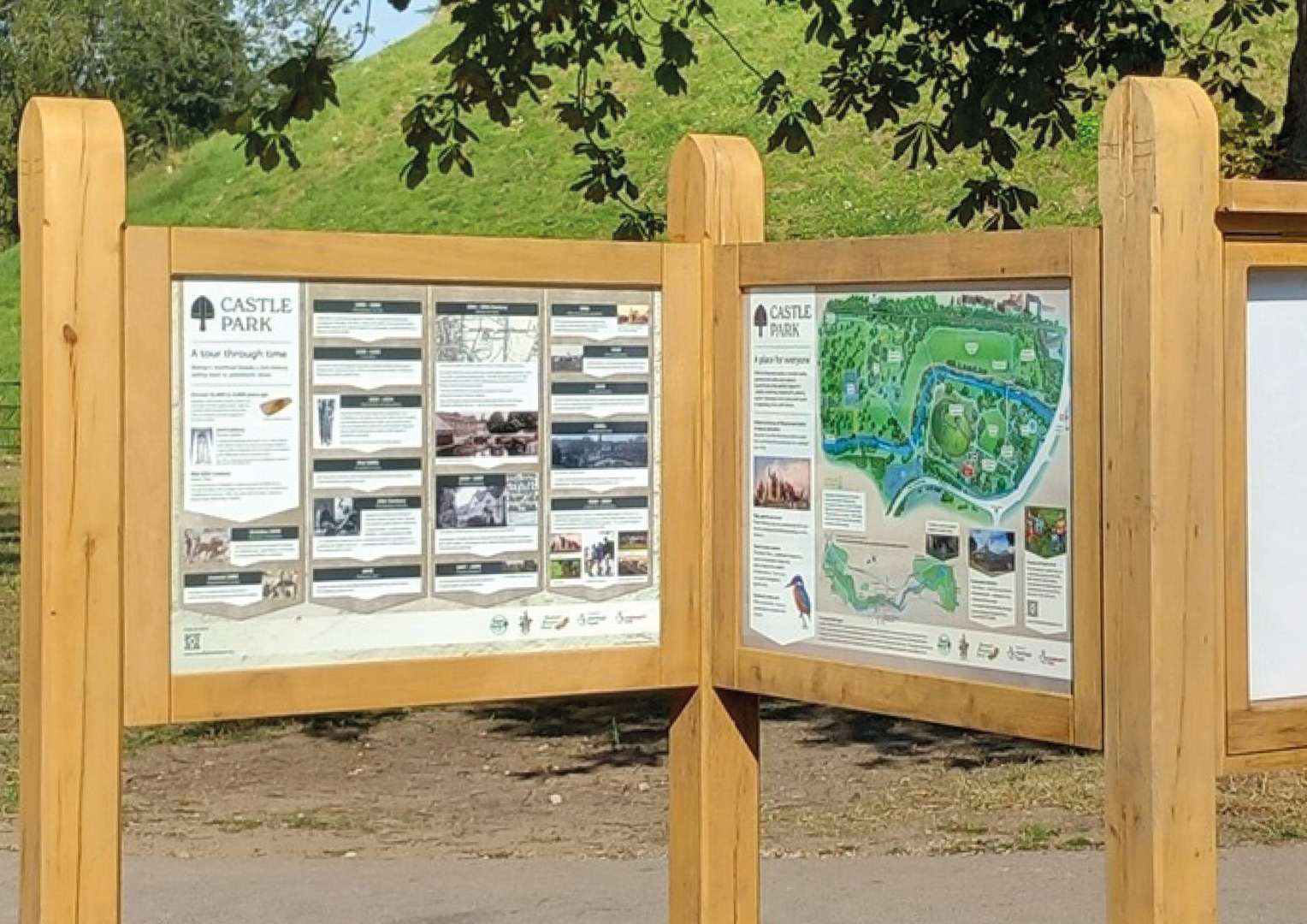
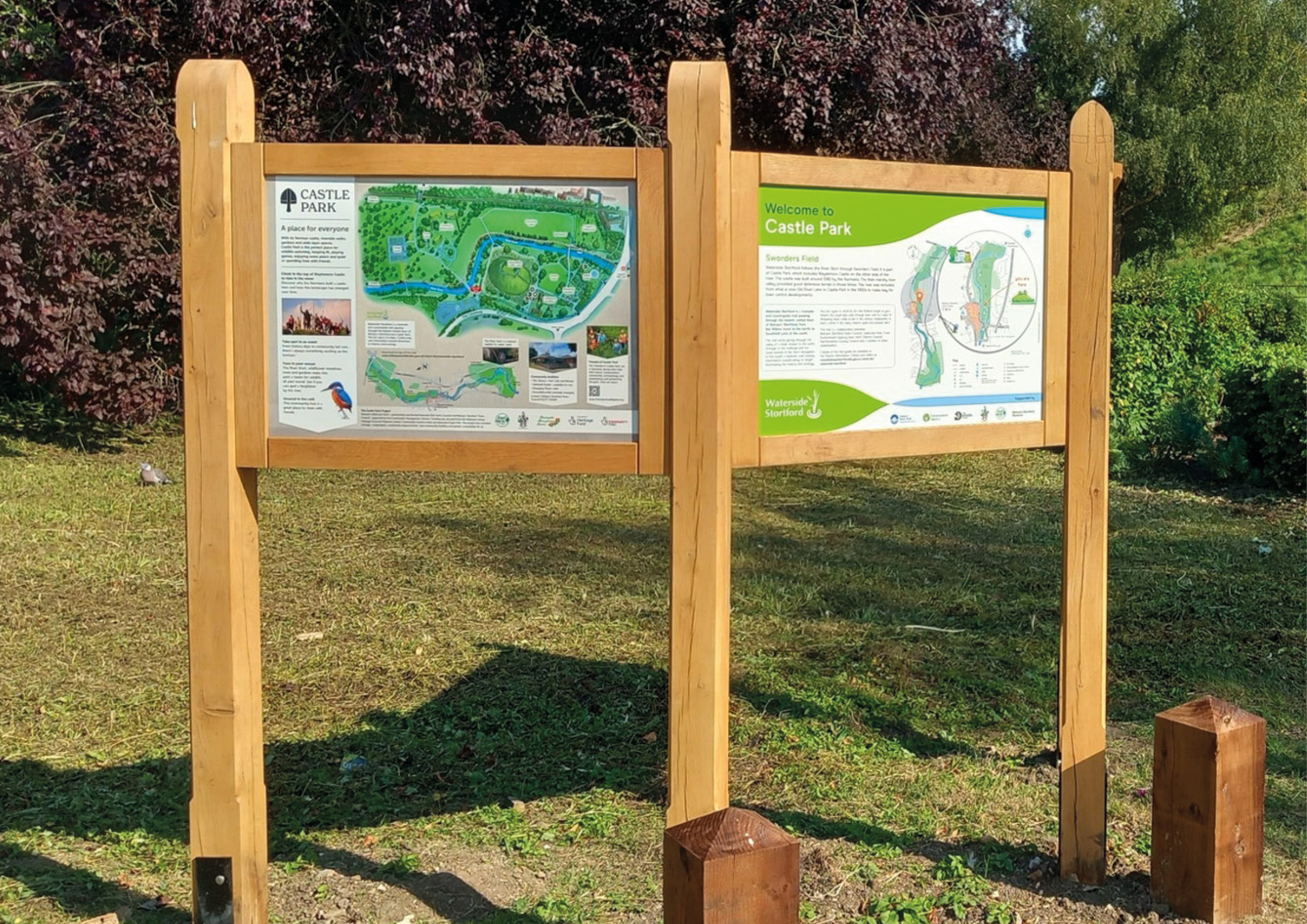
A series of bespoke hand-drawn watercolour illustrations became a defining feature of the scheme, bringing history, wildlife and landscape together in a warm and engaging way. These included a large illustrated orientation map, wildlife interpretation artwork and a detailed reconstruction of Waytemore Castle in its medieval setting, helping visitors imagine how the landscape may once have looked and felt.
The interpretation was carefully layered to make complex heritage and ecological information easier to absorb, combining illustration, maps, accessible copywriting and immersive visual storytelling to create moments of discovery throughout the park.
Our approach
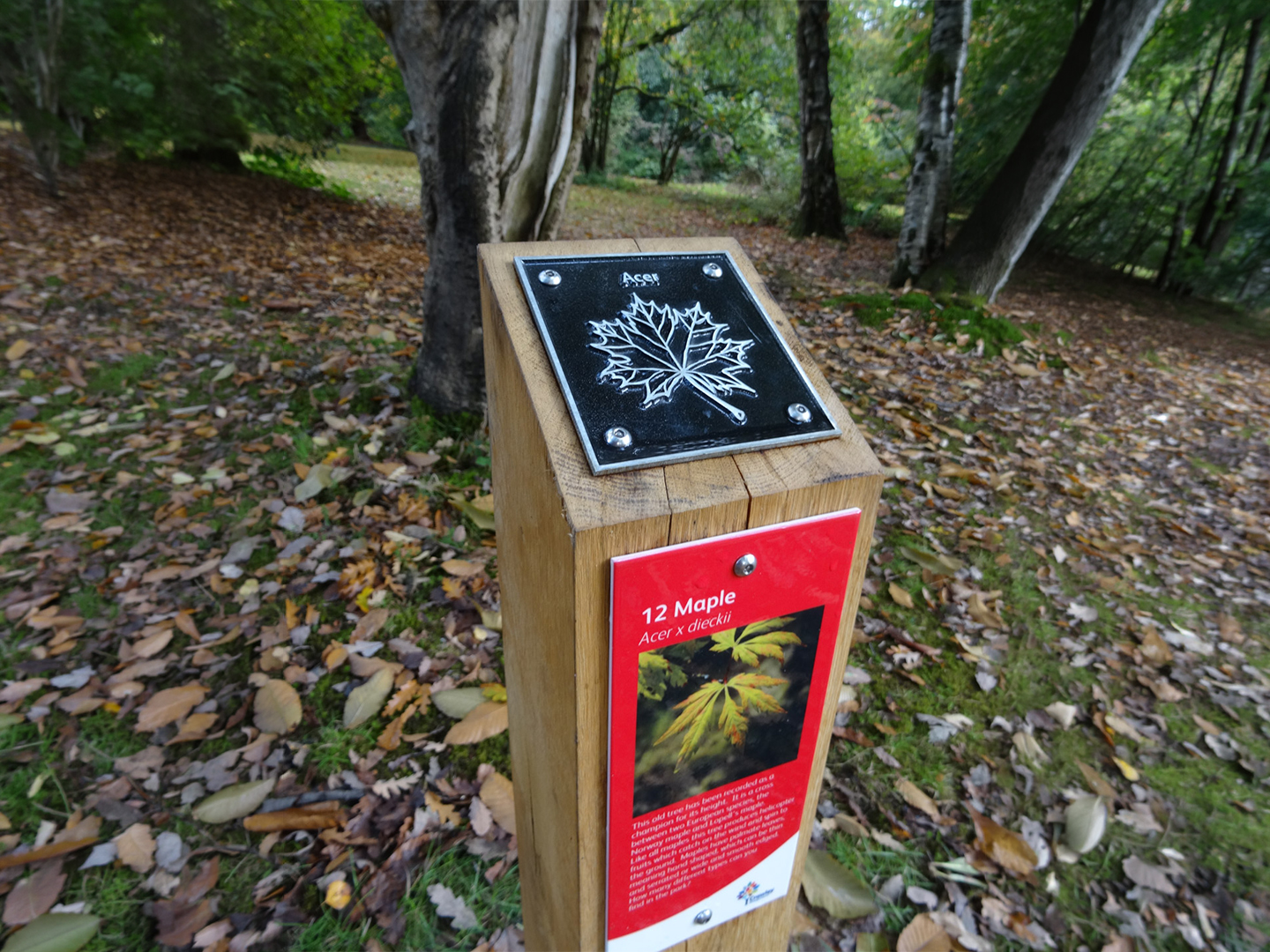
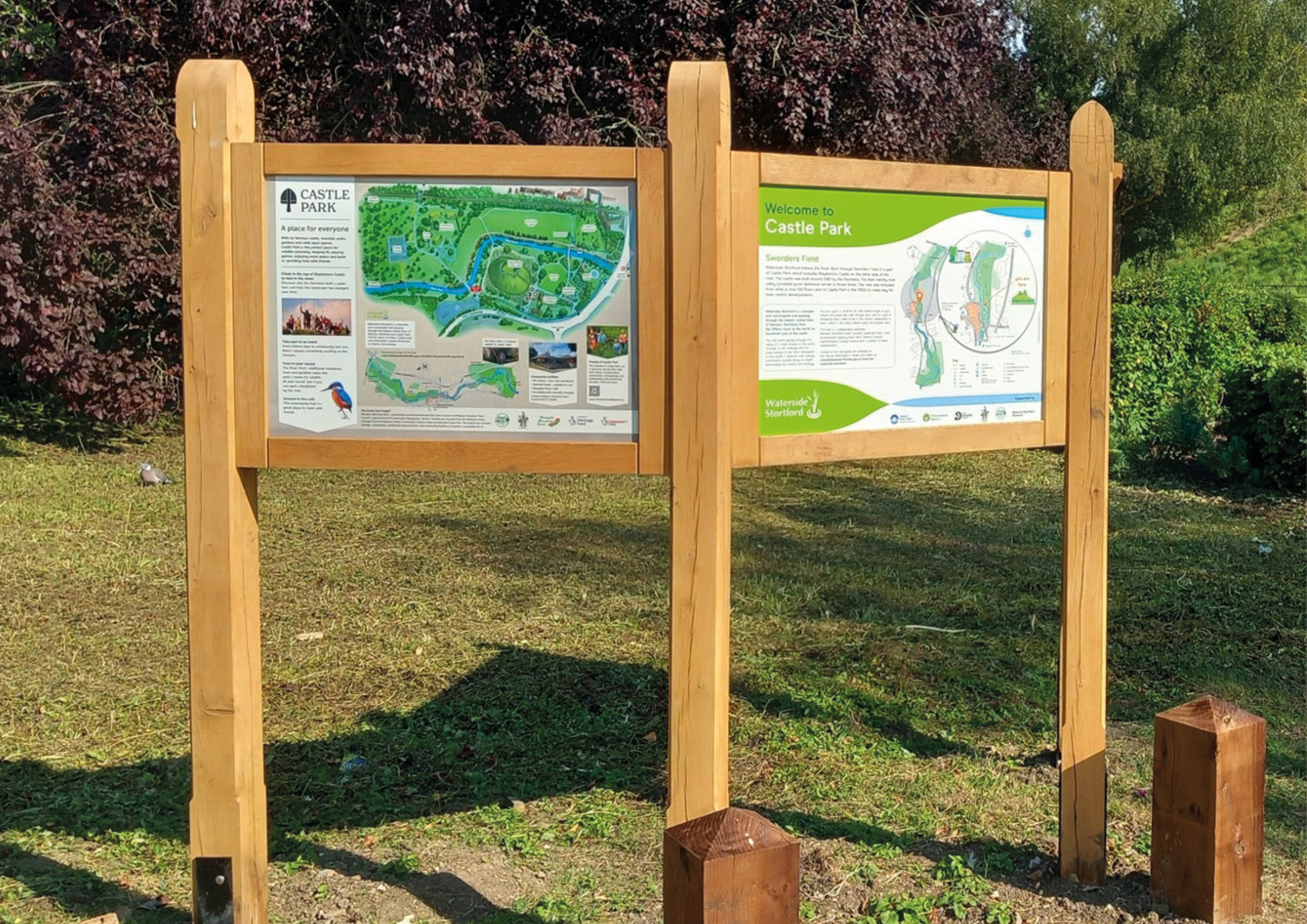
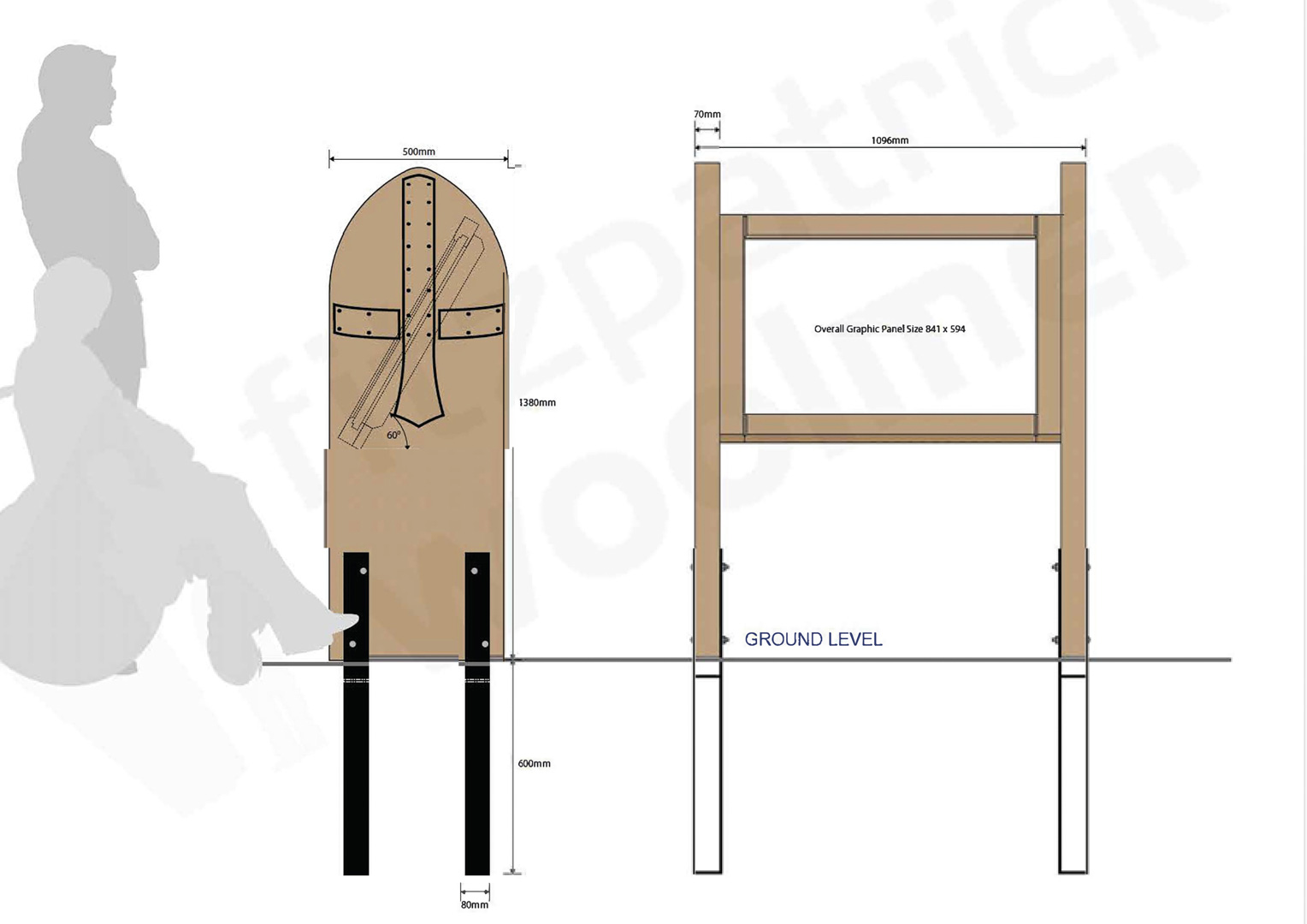
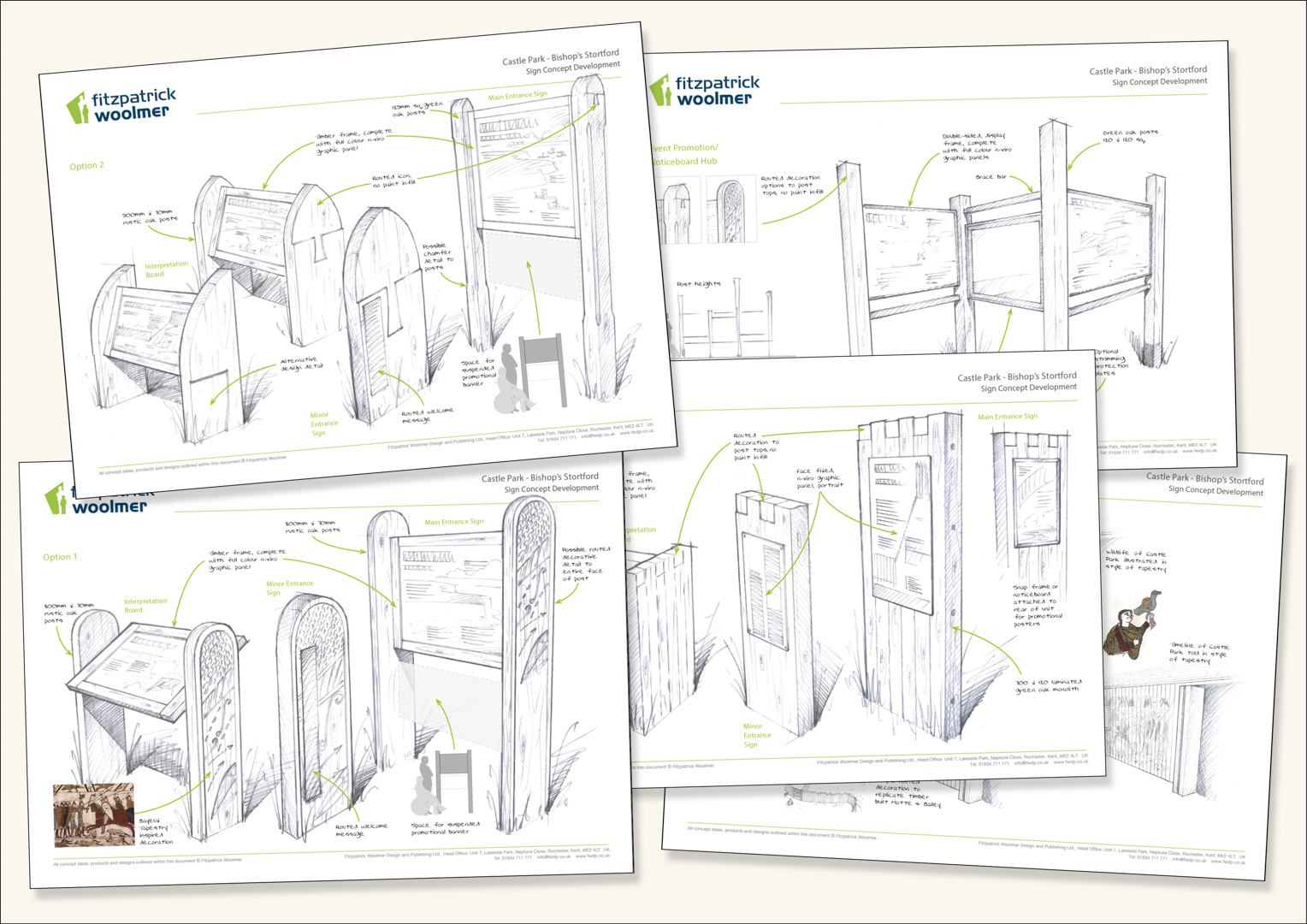
Fitzpatrick Woolmer designed and delivered a wide range of interpretation and visitor engagement materials across the park, including interpretation panels, orientation signage, visitor guides, wildlife and history leaflets, children’s discovery materials and bespoke signage structures integrated sensitively into the landscape.
The project also explored opportunities to embed interpretation more creatively into the built environment, including concepts for artistic timber-clad installations and interpretation incorporated into the architecture of the refurbished pavilion buildings. Specialist interpretation writers were commissioned to support the narrative content, ensuring the information remained historically accurate, engaging and accessible for a broad audience.
From early-stage research and concept development through to graphic design, illustration, artwork production and delivery, Fitzpatrick Woolmer worked collaboratively with the wider project team to create a scheme that felt cohesive, characterful and deeply connected to the identity of the park.

The result
The completed interpretation scheme has helped transform Castle Park into a more engaging, welcoming and memorable destination for both residents and visitors. By weaving together heritage, nature and community stories through thoughtful design and immersive storytelling, the project created a stronger sense of identity across the park while encouraging people to explore and connect more deeply with the landscape around them.
The result is a distinctive and highly visual visitor experience that celebrates the unique character of Castle Park and brings its layered history vividly back to life.