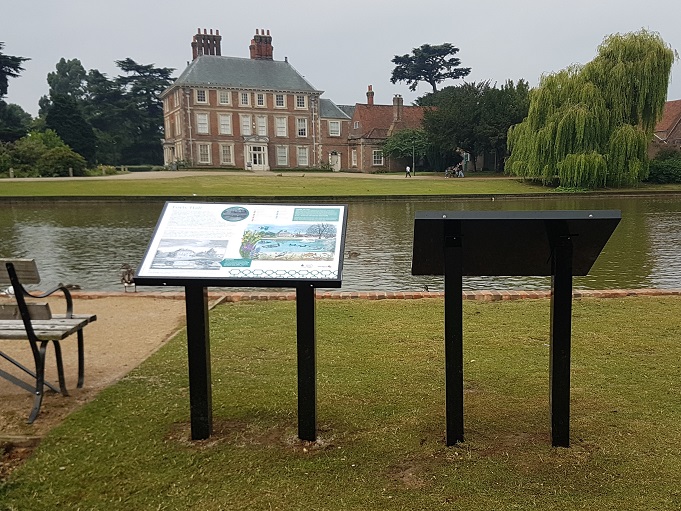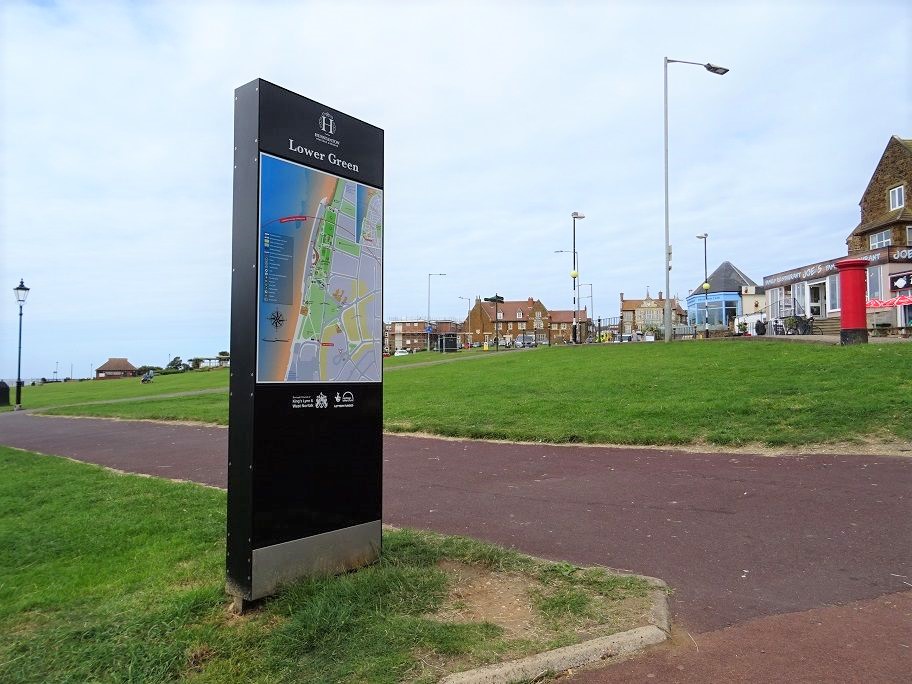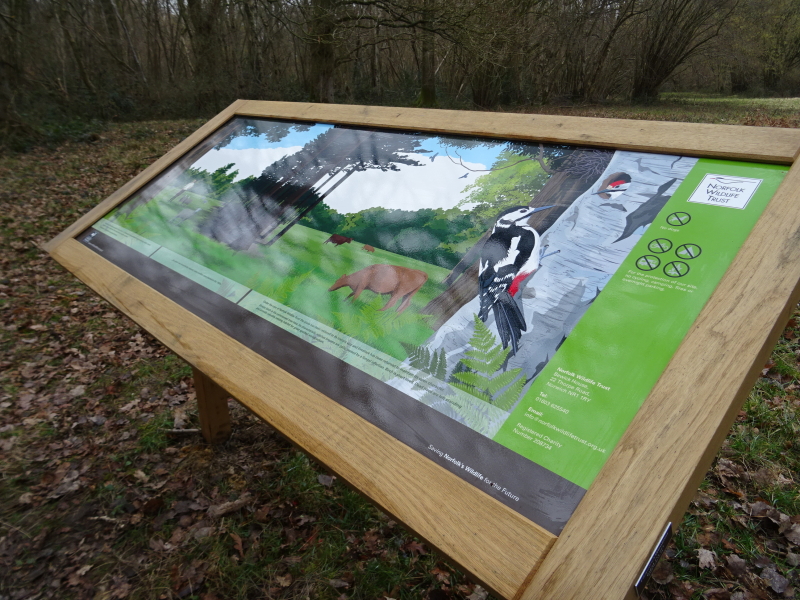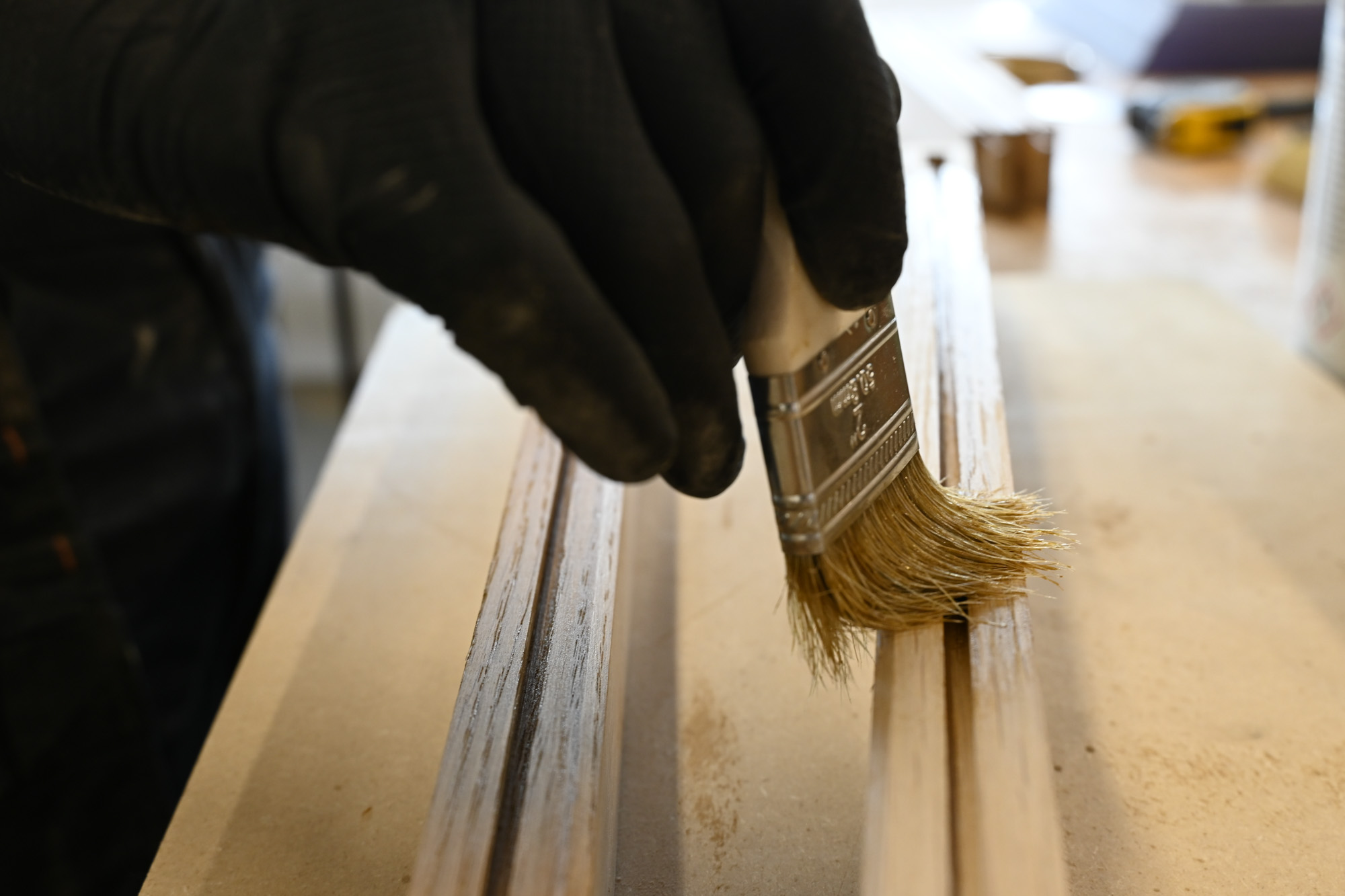
A sign is much more than a sign. In a woodland setting, a weathered fingerpost can become part of the character of a place. An interpretation panel can introduce generations of visitors to a forgotten story. A beautifully made wayfinding sign can quietly guide people through a landscape without competing with it.
But what happens when that signage begins to deteriorate?
Paint fades. Timber weathers. Metal corrodes. Graphics become damaged and information becomes outdated. Eventually, there is a decision to make. Do you repair the sign, refurbish it or replace it altogether?
There is another question worth asking too. What is the most sustainable way to give that sign a future?
Because sometimes, the most sustainable sign is the one you already have.
Not everything old needs to look new
One of the biggest mistakes, particularly when dealing with heritage signage, is assuming that restoration means making everything look brand new.
It doesn’t.
There is an important difference between weathering and deterioration. Materials naturally age and develop character. Timber changes colour, metals can develop a patina and small imperfections can become part of the story of an object that has occupied a landscape for many years.
Deterioration is different. Corrosion that threatens structural integrity, decaying timber, failed fixings or graphics that can no longer be read all affect the ability of a sign to perform its intended purpose.
The objective, therefore, isn’t necessarily to erase every sign of age. It is to understand what gives the sign its character, whether it remains safe and functional, and what can sensibly be retained rather than replaced.
That last question is increasingly important.
Keeping existing signage in service can mean fewer new materials, less manufacturing and less waste. Sustainability isn’t always about installing something new and choosing a recyclable material. Sometimes it starts with making what already exists last longer.
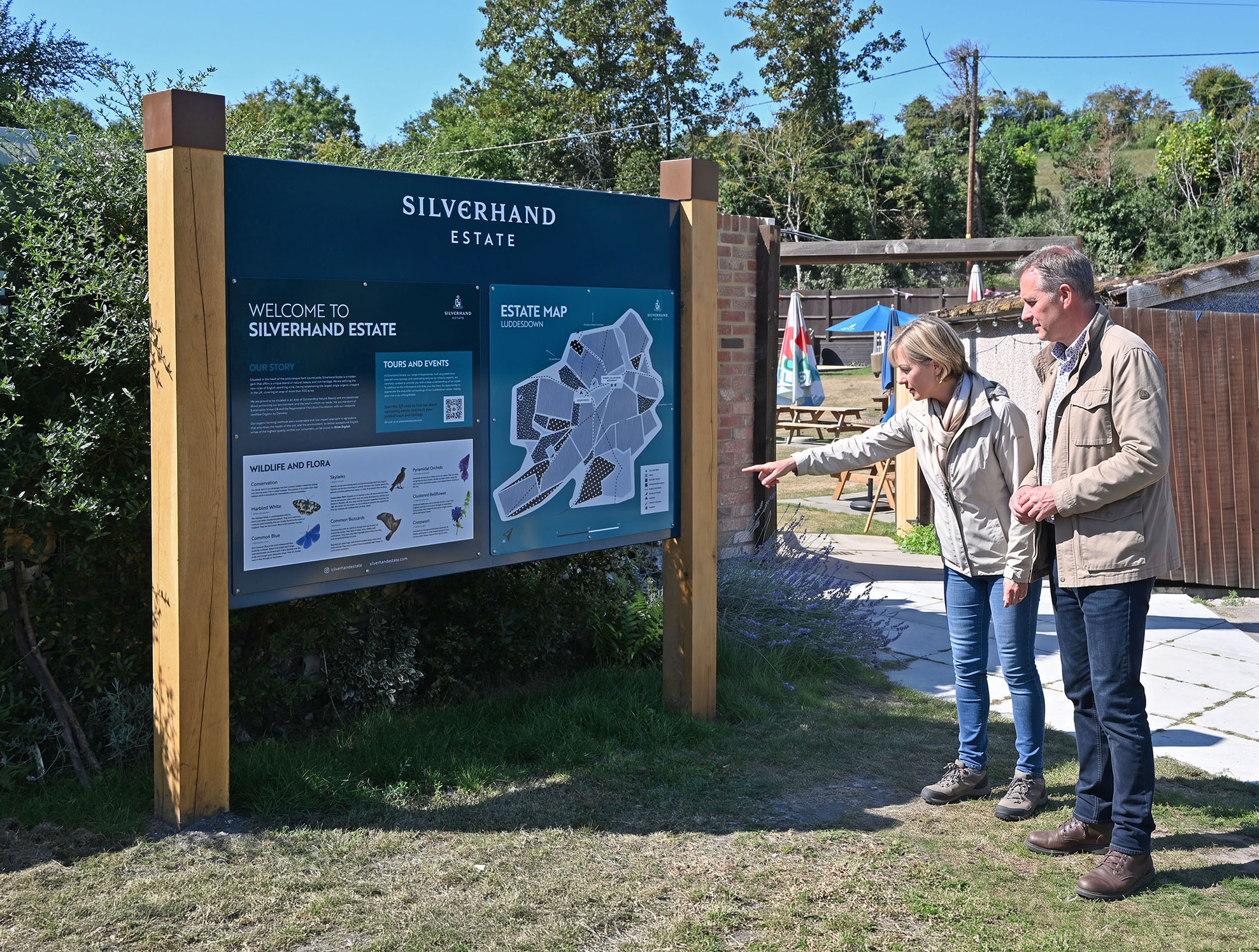
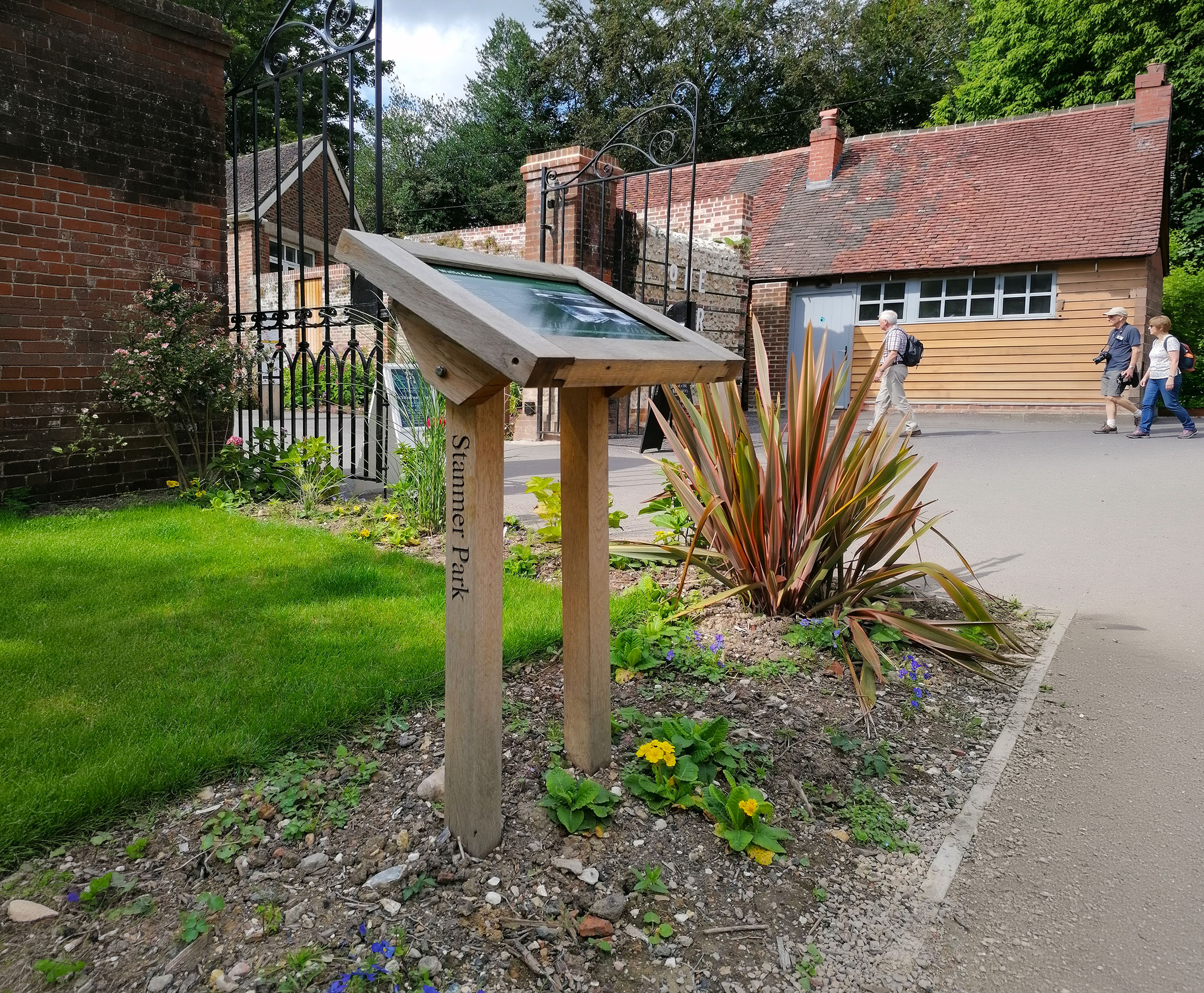

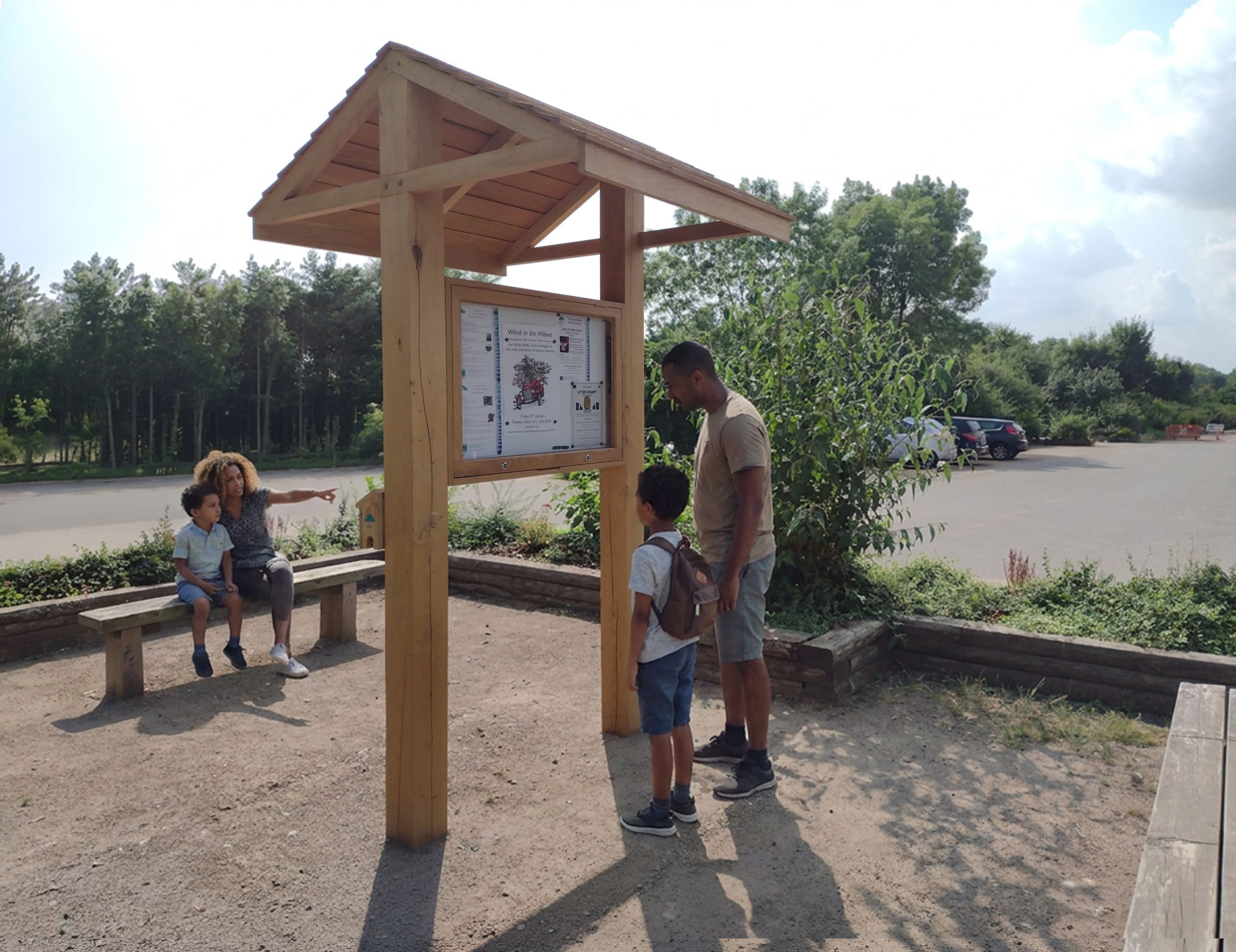
When should you repair a sign?
If a sign is fundamentally sound, a relatively simple repair may be all that’s required.
A loose fixing, damaged bracket, localised corrosion or failed component doesn’t necessarily justify replacing the entire sign.
A considered repair might involve replacing fixings or individual components, treating localised corrosion, repairing frames or mounting structures, restoring lettering, or carrying out minor repairs to timber or metalwork.
The principle is simple. Retain as much of the existing sign as possible and intervene only where necessary.
Regular inspection and timely maintenance can also prevent relatively minor problems from becoming major failures. Treating corrosion early or replacing a damaged component can potentially add years to the useful life of a sign.
Maintenance should therefore be considered part of sustainability rather than something that happens only when a sign begins to fail.
When does a sign need more than a repair?
Sometimes the structure remains perfectly serviceable, but years of exposure have left the sign looking tired or elements of it no longer perform as they should.
This is where refurbishment can make a real difference.
Refurbishment might include repainting or refinishing a structure, renewing lettering or graphics, replacing interpretation panels or sign faces, or updating individual components while retaining the main structure.
The result doesn’t necessarily have to look new.
For many heritage, landscape and public realm projects, the objective should be to make signage look cared for and appropriate to its surroundings rather than pristine.
This selective approach can substantially extend the life of signage. A sound stainless steel structure doesn’t need to be discarded simply because the graphic panel it supports has reached the end of its useful life. Equally, timber components may be repaired and refinished where they remain structurally sound.
This is also why modular design matters. When individual panels, graphics, fixings and structural components can be accessed and replaced independently, a sign can evolve and be maintained without continually replacing the whole structure.
What if the information is the problem?
A sign can be in excellent physical condition and still have stopped doing its job.
Imagine an interpretation panel that looks immaculate but the text is tiny, the language is difficult to understand and the information is twenty years out of date.
Technically, there may be nothing wrong with the sign. But is it still working for its audience?
For interpretation signage, the quality and accessibility of the content are just as important as the physical materials.
Refurbishment can therefore involve updating information and imagery, rewriting content for today’s audiences, improving hierarchy, readability and contrast, or introducing additional ways for visitors to access information.
The physical sign may remain largely unchanged while its ability to communicate is transformed.
That is another important aspect of sustainability. Existing infrastructure can remain useful for longer when it has been designed to accommodate changes in information rather than requiring complete replacement every time its content needs updating.

Wayfinding needs to work as a system
Wayfinding presents a different challenge because an individual sign rarely works in isolation.
Visitors need to understand where they are, where they are going and what they can expect to find when they get there. If routes, destinations or facilities change, simply replacing an individual sign may solve very little.
Signs may have been added gradually over many years, different styles may have appeared and directions can become inconsistent. Important destinations may be poorly signed, while other locations accumulate more signage than they need.
In these circumstances, the first question shouldn’t necessarily be which signs need replacing. It should be whether the wayfinding system still works as a whole.
A wayfinding audit and strategy can establish what needs to be retained, relocated, updated or replaced and, equally importantly, whether some signage is no longer required at all.
A well-planned system can therefore contribute to sustainability by ensuring signs are only installed where they are genuinely needed and that each one is appropriately designed and specified for the job it has to do.
When should a sign be replaced?
Sometimes repair or refurbishment simply isn’t enough. Replacement becomes appropriate when the underlying structure has deteriorated beyond practical repair, when safety or stability has been compromised, when materials have failed extensively, or when the sign can no longer fulfil its intended purpose.
Replacement may also be necessary when a new wayfinding strategy fundamentally changes what is required or when existing signage needs to perform a substantially different role.

But replacing a sign doesn’t mean abandoning sustainability
When a new sign is genuinely necessary, its environmental impact can be considered from the beginning.
Material selection is important, but it is only part of the equation. Durability, modularity, repairability, maintenance, recyclability and eventual end-of-life disposal all have a bearing on how sustainable a sign will ultimately be.
Specification should also reflect the environment in which the sign will spend its life. A coastal location, woodland setting, busy urban environment or heritage estate can place very different demands on materials and finishes. Selecting appropriate materials for those conditions can help avoid premature deterioration and unnecessary replacement.
Sustainable signage is more than materials
When people talk about sustainable signage, the conversation often turns immediately to recycled or recyclable materials.
Those things matter, but sustainability is broader than that.
A sign designed to be durable, maintainable and repairable can have a very different lifespan from one that is difficult to access, update or repair.
At Fitzpatrick Woolmer, we design signage with this longer-term performance in mind. Wherever practical, structures and graphic elements are designed so that individual components can be maintained or replaced without discarding the entire sign. Information can be updated, printed panels replaced and components repaired while retaining serviceable parts of the original structure.
It means thinking about the whole life of the sign from the outset. Is the material appropriate for its environment? Can individual components be replaced? Can information be updated without replacing the structure? Can the materials eventually be separated for recycling? And, above all, has the sign been designed and manufactured to remain useful for as long as reasonably possible?
Repairing isn’t always the sustainable answer. Neither is refurbishment. And there comes a point when keeping a failing sign in service no longer makes practical or environmental sense.
The important thing is to make that decision intelligently
Understand what remains serviceable, identify what genuinely needs to change and intervene only as much as necessary. When replacement is required, design the new sign so that it is durable, maintainable and adaptable enough to remain in service for many years to come.
Because one of the most effective ways to reduce the environmental impact of signage is also one of the simplest: make it well, look after it and make it last.