Choosing the best material for outdoor signage isn’t simply a question of deciding between metal, timber or plastic. A sign installed in a sheltered visitor attraction faces very different demands from one positioned on an exposed coastline, beside a busy road or along a remote country trail
Weather, vandalism, accidental impact, maintenance, installation, sustainability, appearance and budget should all influence the decision. Just as importantly, the material itself is only part of the story. Its thickness, construction, reinforcement, protective finish and the way individual components are manufactured can make a considerable difference to how well a sign performs over its lifetime.
There is therefore no single “best” outdoor signage material. The right question is: which material, and which method of construction, is best suited to the site?
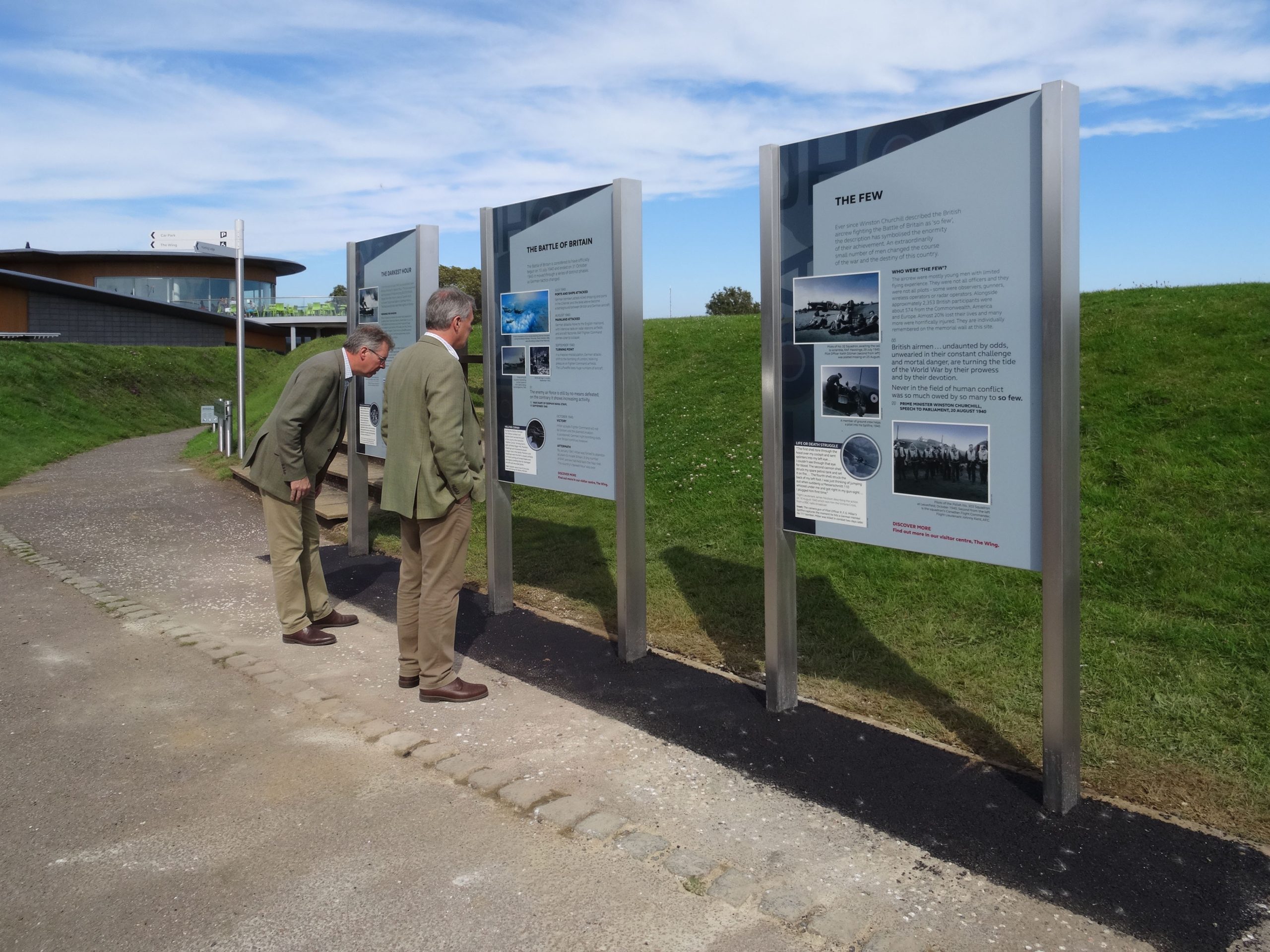
Stainless steel: Strength, durability and long-term performance
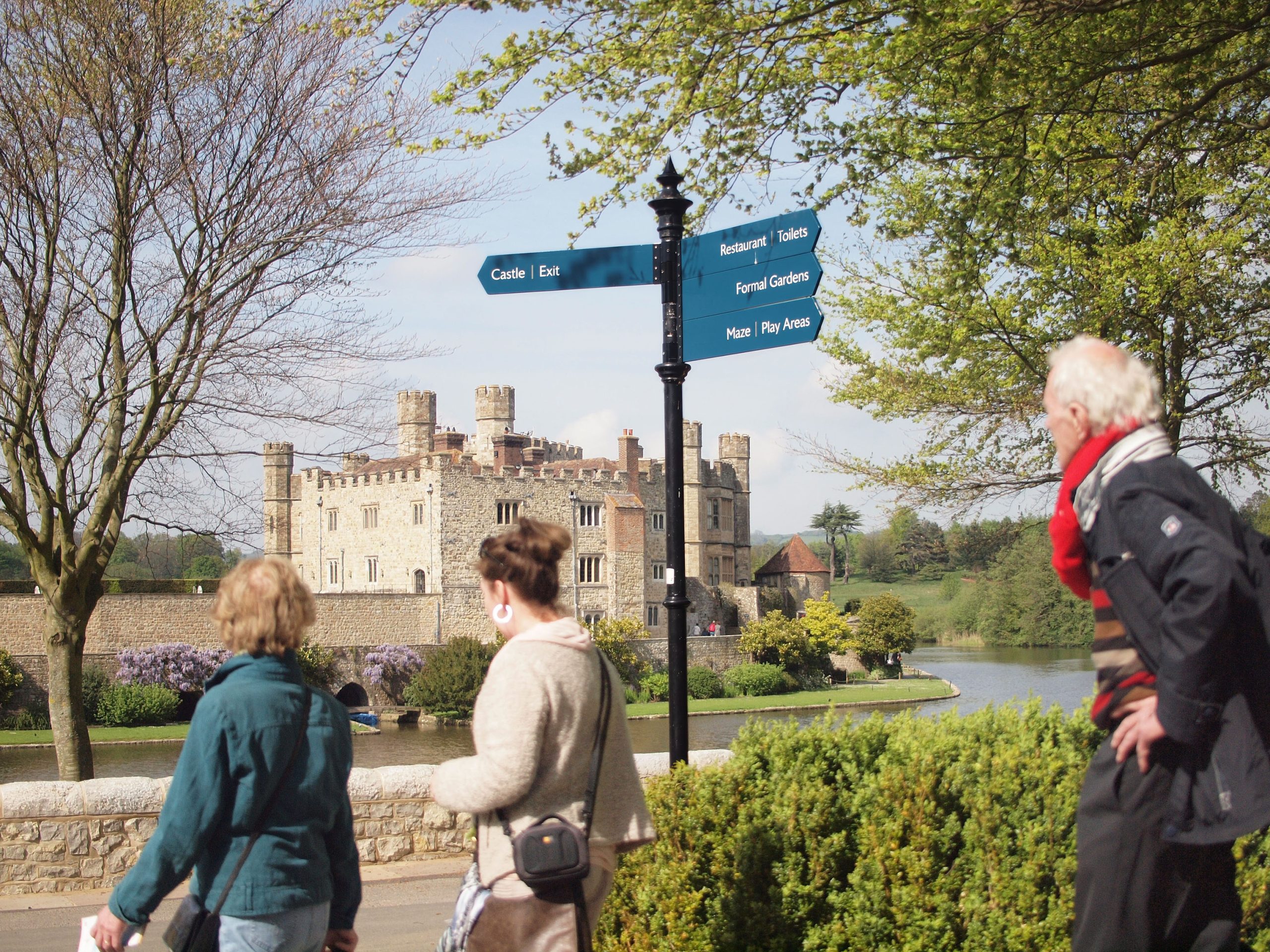
For permanent outdoor signage, stainless steel offers an excellent combination of strength, durability and corrosion resistance. It is particularly valuable where signs are exposed to regular public interaction, accidental impact or grounds maintenance equipment.
This physical strength is one reason Fitzpatrick Woolmer uses stainless steel extensively for sign structures and posts, rather than relying predominantly on aluminium. Stainless steel is harder and stronger than aluminium, allowing appropriately designed structures to withstand the everyday demands of public environments.
Weight is sometimes perceived as a disadvantage of stainless steel signage, but this can be misleading. Well-designed stainless steel signs can be manufactured in modular kit form, allowing posts, frames, panels and other components to be transported separately and assembled on site. Individual stainless steel components can consequently be considerably easier to handle than large, fully assembled timber structures. Green oak posts, in particular, retain moisture and can be surprisingly heavy.
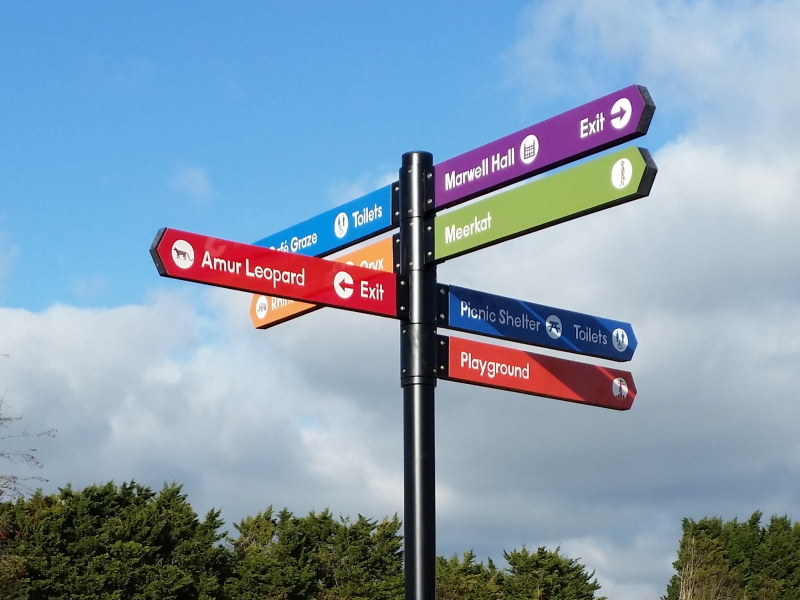
Appearance is another consideration. Stainless steel does not have to mean an exposed metallic finish. Fitzpatrick Woolmer’s stainless steel signage is normally powder coated, with black as the standard colour and alternative colours available to suit a project’s identity or environment, usually at additional cost. From an environmental perspective, stainless steel combines a long potential service life with excellent end-of-life recyclability. Established recycling systems also mean that recovered stainless steel remains a valuable manufacturing resource.
For exposed public spaces and projects where longevity, structural strength and vandal resistance are priorities, stainless steel is often one of the strongest choices available.
Aluminium: Excellent for panels, but not always for structures
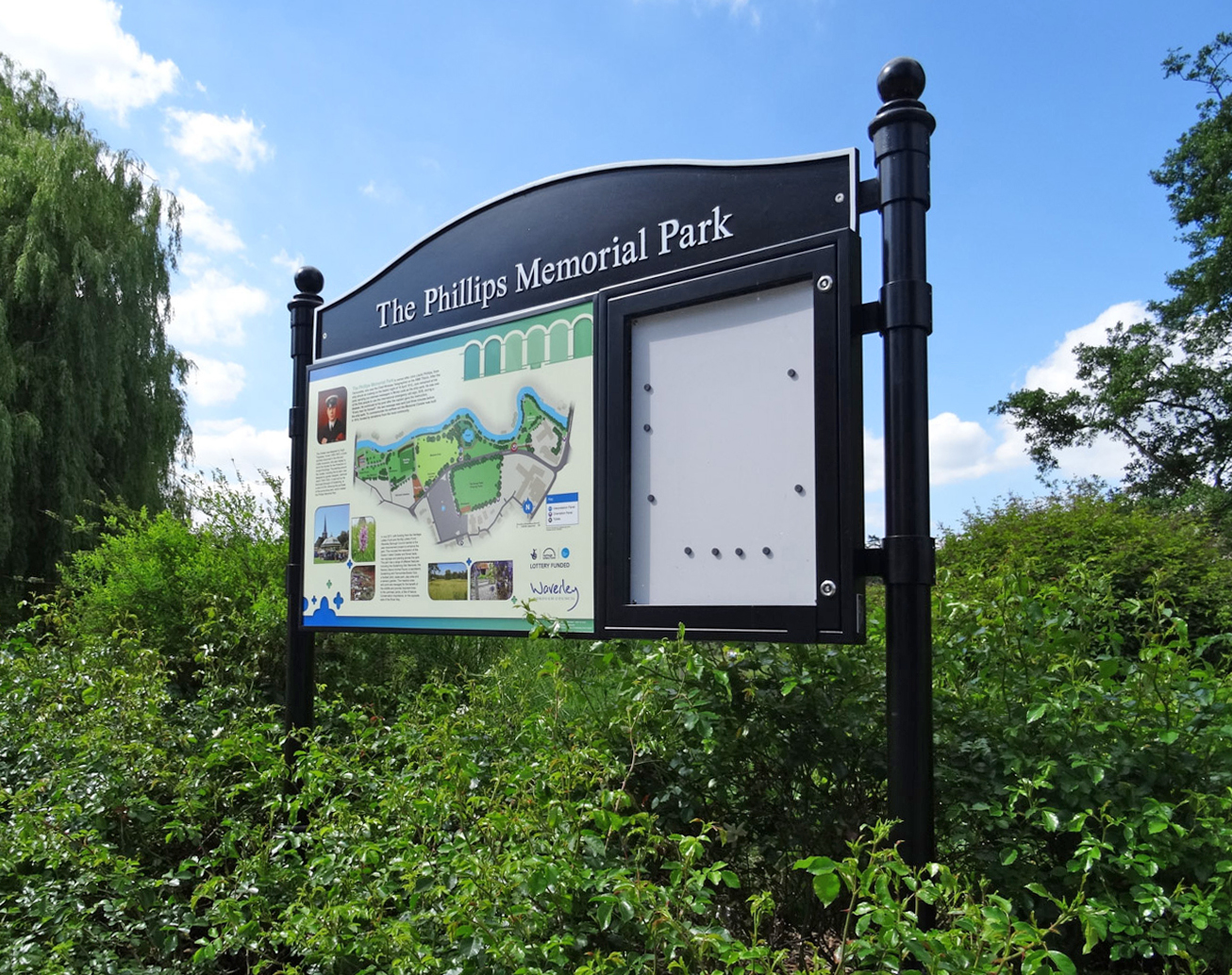
Aluminium is one of the most commonly used materials within the signage industry. It is lightweight, corrosion resistant, highly recyclable and easy to cut, fold and fabricate. Those are genuine advantages.
They do not, however, mean aluminium is automatically the best material from which to construct an entire outdoor sign.
Aluminium is softer than stainless steel and can be more susceptible to denting and deformation from impact. This becomes particularly relevant at post and structure level, where signs can be struck by lawnmowers, strimmers and other grounds maintenance equipment or subjected to deliberate abuse.
Where aluminium is used structurally or as a larger panel, good design should account for this through suitable material thickness, folded returns, backing boards or other reinforcement.
At Fitzpatrick Woolmer, aluminium is primarily used where its particular characteristics are advantageous, including n-Viro printed aluminium panels and rigid fabricated trays. Structural elements are more commonly manufactured from stainless steel, oak, recycled plastic or Corten steel.
As with stainless steel, aluminium signage does not need to be presented with a bare metallic appearance. Fabricated aluminium components can be powder coated, providing a durable finish and a wide choice of colours to complement branding and the surrounding environment.
The distinction is important. Specifying “an aluminium sign” tells you relatively little about its likely performance. An appropriately reinforced aluminium panel within a robust stainless steel structure is a very different proposition from a lightweight sign where the posts, structure and panels are all manufactured from thin aluminium sections.
Oak: Natural character with genuine structural strength
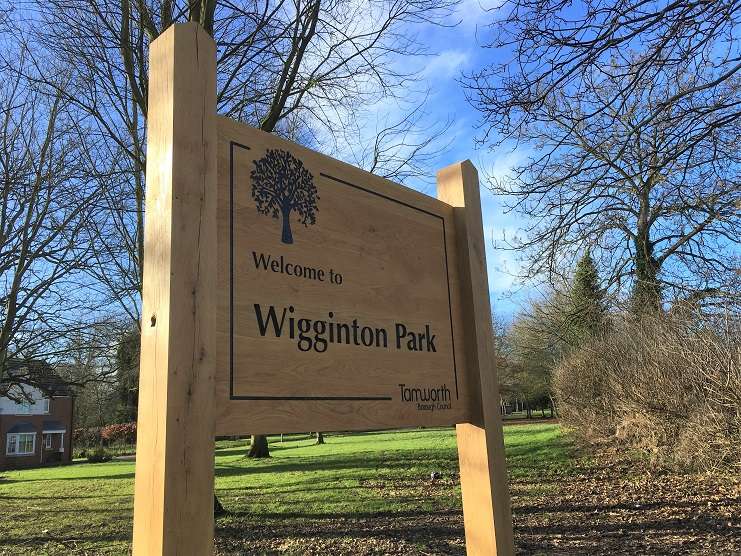
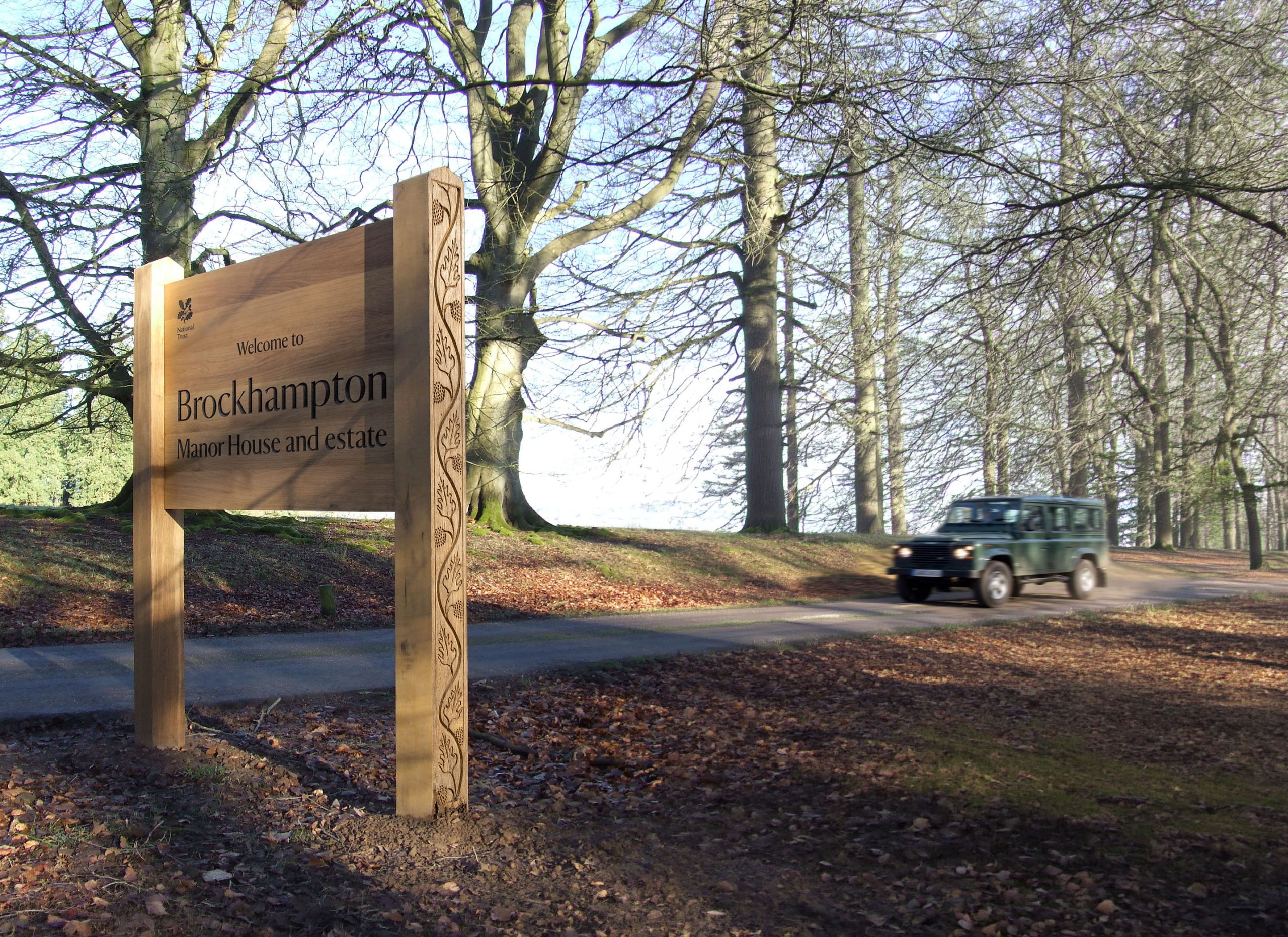
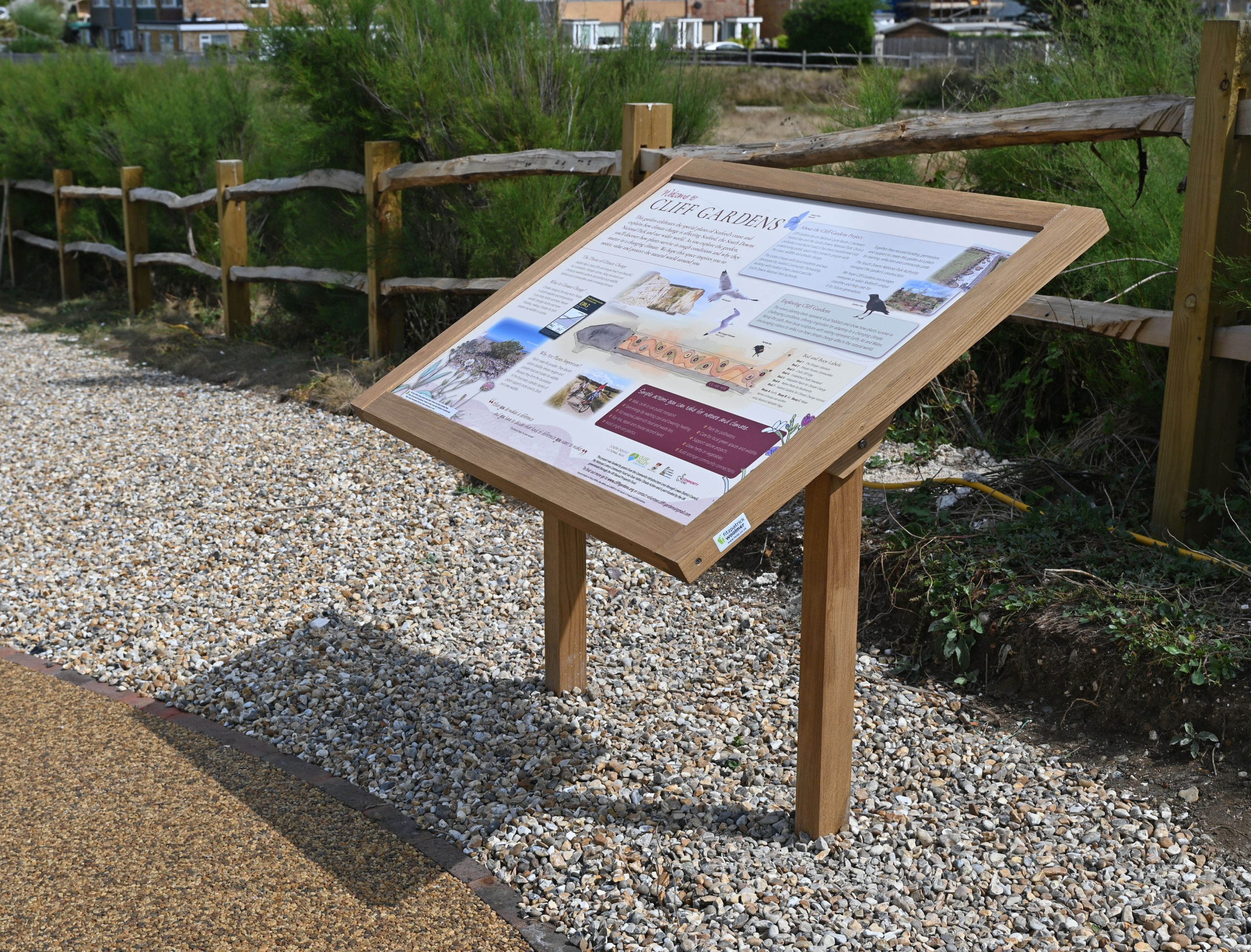
Oak remains one of the most attractive materials for signage in parks, nature reserves, heritage properties, country estates and other landscapes where a natural material helps the sign belong within its surroundings.
Its appeal, however, isn’t purely aesthetic. Substantial oak posts and structures are strong and capable of withstanding the knocks and impacts that outdoor signage inevitably encounters. This can make oak particularly appropriate where the alternative might be a lighter metal structure vulnerable to accidental damage.
Oak will naturally weather outdoors and its appearance will change over time. For many landscapes, this is part of its attraction rather than a disadvantage. Correct material selection, detailing and construction remain important to achieving a long service life.
Responsibly sourced timber also has strong environmental credentials as a renewable material. FSC or PEFC-certified timber provides assurance around responsible forest management, while durability, repairability and the ability to replace individual components should form part of the wider sustainability assessment.
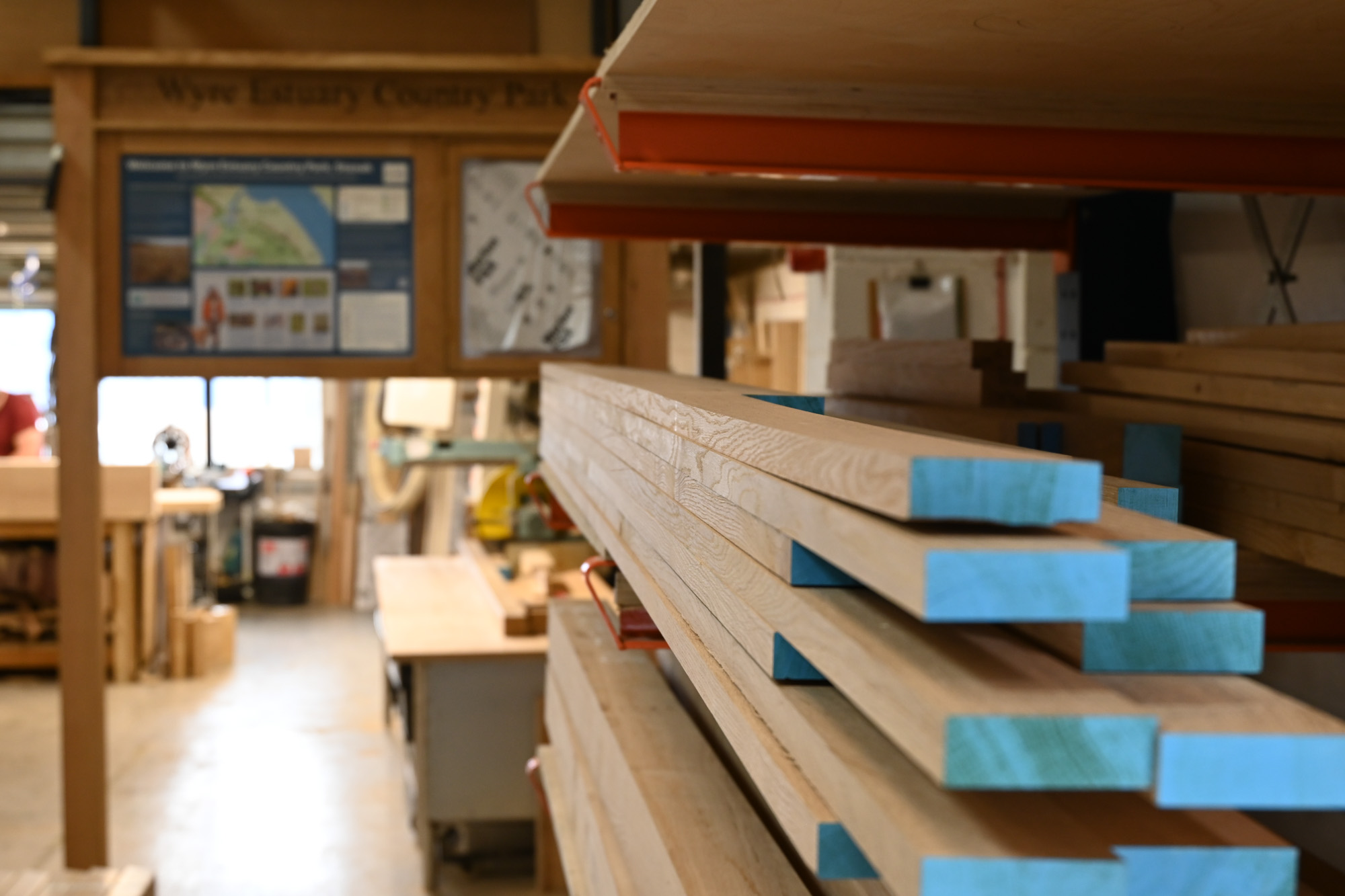
One practical consideration is weight. Solid oak, particularly green oak containing significant residual moisture, can be extremely heavy. Some timber signs are supplied fully assembled, potentially requiring additional people or lifting arrangements during installation. This is why installation requirements should be considered at the design stage rather than simply assuming that timber will be easier to handle than metal.
Recycled plastic: Low maintenance, but understand its limitations
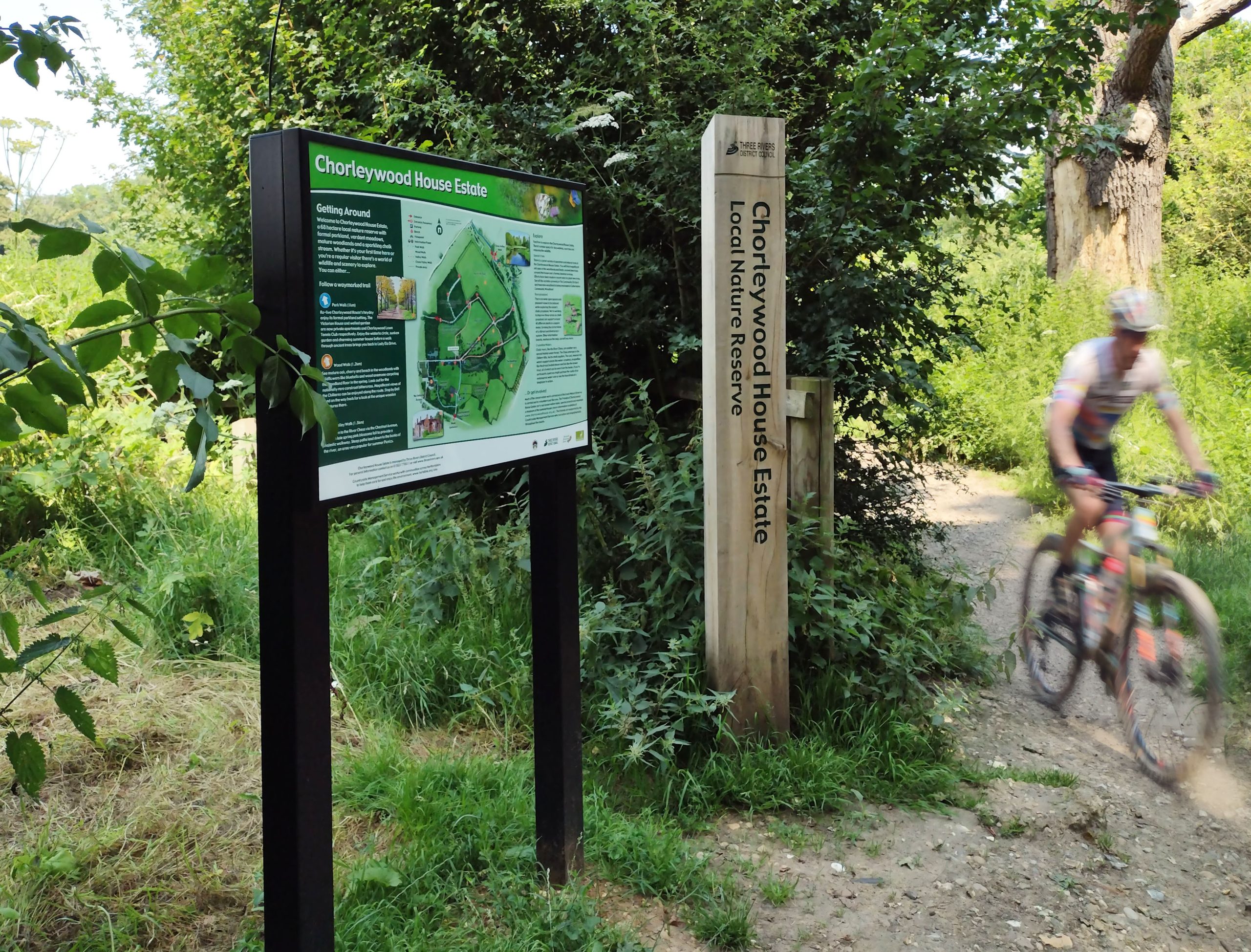
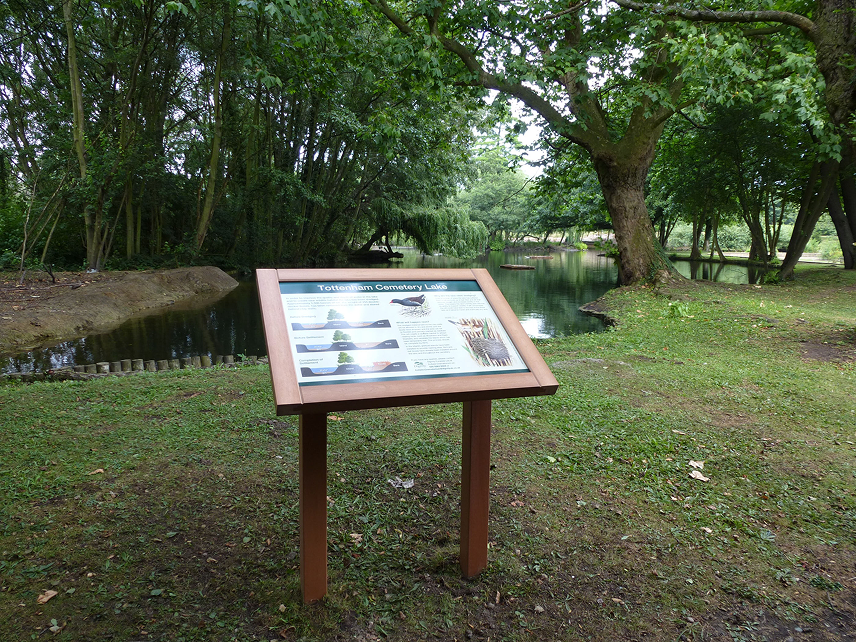
Recycled plastic has become increasingly popular for outdoor signage, and with good reason. It does not rot, requires little routine maintenance and provides a productive second life for waste plastic that might otherwise require disposal.
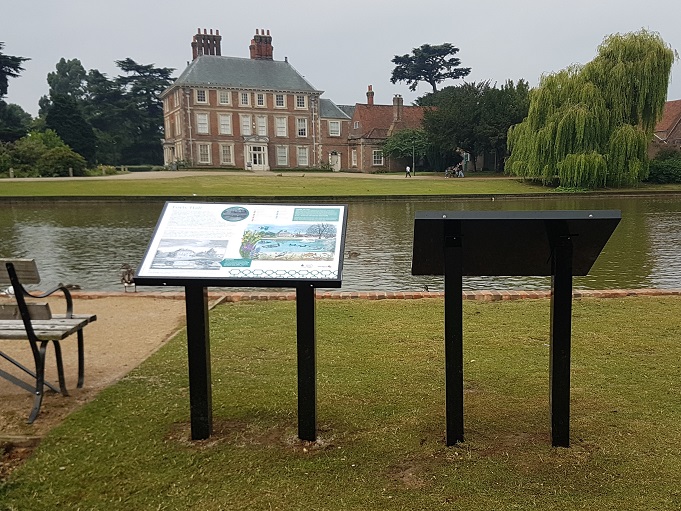
It can be particularly effective for waymarking posts, noticeboard structures and signs in parks, countryside locations and other environments where low maintenance is important.
There is, however, an important trade-off.
Compared with stainless steel or substantial oak, recycled plastic has relatively poor resistance to deliberate vandalism and certain forms of physical impact. Where there is a history or significant risk of antisocial behaviour, the material should therefore be considered carefully.
This does not make recycled plastic a poor signage material. It makes it a material that needs to be specified for the right environment. Asking about vandalism, likely public interaction and grounds maintenance activity before specifying recycled plastic can prevent a seemingly attractive material choice becoming a false economy.
Its environmental credentials should also be considered in context. Using recycled material helps create demand for recovered plastics and avoids the need for virgin material, while its resistance to rot and low maintenance requirements can contribute to a long useful life. At the end of that life, consideration should be given to how the particular product can be recovered or recycled.
Corten Steel: Strength with a distinctive natural appearance
Corten, or weathering steel, offers something quite different. Its characteristic rust-coloured surface makes it particularly effective in rural landscapes, heritage environments and contemporary public realm schemes where a warmer, more organic appearance is required.
Unlike conventional untreated steel, weathering steel is designed to develop a stable surface patina. Through repeated wet and dry cycles, this oxide layer develops and progressively slows further corrosion, reducing the requirement for conventional protective paint systems.
Rather than supplying Corten in its original steel-grey state and asking the client to wait for natural weathering to take place, Fitzpatrick Woolmer can develop the rusted patina before the finished sign leaves the workshop. This gives the product its intended character from installation rather than waiting months for the appearance to develop naturally.
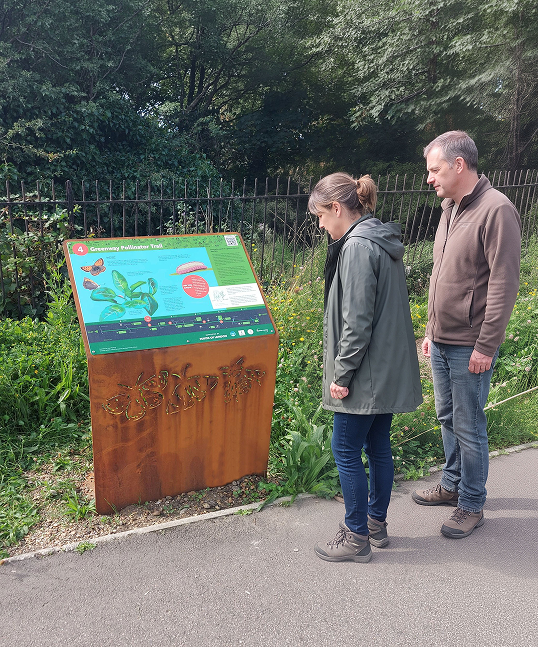
Corten can also be laser cut, opening up considerable creative possibilities. Lettering, patterns, illustrations and decorative details can be cut directly into the material, producing signs with a distinctive architectural quality.
There are limitations. Corten can be very heavy and even relatively small signs may require two people to lift safely. Its suitability also depends on the environment. Weathering steel relies on appropriate wet and dry cycles to develop its protective patina, and environments involving persistent moisture or high levels of airborne salt require particular consideration. Run-off during weathering can also stain adjacent surfaces.
Used in the right setting, however, Corten combines structural strength, longevity and an appearance that becomes part of the landscape rather than simply sitting within it.
Tricoya: A versatile engineered timber board
There are applications where the appearance and machinability of a timber-based product are desirable but solid timber isn’t necessarily the most practical solution.
Tricoya is an acetylated wood fibre panel engineered for demanding exterior applications. It has excellent dimensional stability and resistance to swelling and deterioration from moisture, and the manufacturer provides a 50-year warranty for above-ground applications.
Fitzpatrick Woolmer uses Tricoya in applications including signage produced for the National Trust and Sandringham Estate. It is particularly useful as a backing board because it is rigid, durable, relatively lightweight and extremely versatile to manufacture.
As a board material, it can be CNC machined into bespoke sizes and shapes, allowing curves, profiles and other details to become part of the sign design rather than being restricted to standard rectangular formats. Fitzpatrick Woolmer generally stocks 18mm Tricoya, with 25mm material available where larger spans require additional rigidity.
The finished board can then receive a Polycoat finish in a colour selected to complement the project’s brand, architecture or surrounding landscape.
Its combination of durability, machinability and relatively low weight makes Tricoya particularly useful where more traditional sheet materials might otherwise compromise either the design or expected service life.
Sustainability: Look beyond the material label
Environmental considerations are increasingly influencing signage specifications, but judging sustainability solely by the material name can produce misleading conclusions.
Recycled plastic makes productive use of waste material. Responsibly sourced oak is renewable. Stainless steel and aluminium are highly recyclable. Weathering steel can provide a long service life with reduced reliance on applied protective coatings, while engineered timber products such as Tricoya can offer exceptional durability.
The more meaningful question is what happens across the complete life of the sign.
How long is it expected to remain in service? What maintenance will it require? Can individual panels or components be replaced without replacing the whole sign? Can damaged parts be repaired? What happens to the materials at the end of their useful life?
A durable modular sign that remains in service for many years, while allowing its information panels to be updated independently of its structure, may provide considerably better whole-life value than a cheaper sign requiring complete replacement several times over the same period.
Material efficiency, longevity, repairability and end-of-life recovery should therefore be considered alongside the environmental credentials of the raw material itself.
So, what Is the best material for outdoor signage?
There isn’t one answer.
For exposed locations, high-footfall environments and sites where impact or vandalism is a concern, stainless steel may provide the most appropriate combination of strength and longevity. For parks, estates and natural landscapes, oak can provide structural strength with a softer visual character. Recycled plastic can be an excellent low-maintenance solution where vandalism risk is low, while Corten offers strength and an unmistakable natural patina. Tricoya provides an extremely durable and versatile board material, while aluminium performs particularly well for printed panels and fabricated trays when properly supported.
Budget matters, but purchase price should not be considered in isolation. Installation requirements, maintenance, repair, expected lifespan and eventual replacement all contribute to the true cost of outdoor signage.
Perhaps most importantly, ask how the sign will actually be made.
What material are the posts and structural components? What thicknesses and grades are being used? How are panels reinforced? How are metal surfaces protected? Can individual components be replaced? What happens if the sign is struck by maintenance equipment or deliberately damaged?
The answers can reveal far more about the likely performance of a sign than the material description on a quotation.
The best outdoor signage is therefore rarely the result of choosing a material from a list. It comes from understanding the environment first, then combining the right materials, manufacturing techniques and finishes to create a sign designed for that particular place.
Professional outdoor signage design expertise
We recognise that the broad scope of outdoor signage models on offer can make it tricky to make informed decisions, balance cost efficiencies with durability, and ensure your signage presents your brand or attraction in a favourable light.
Here at Fitzpatrick Woolmer, signage is our speciality. We can walk through alternative signage models and displays, discuss the types of signage that are consistent with your branding and compare the costs and features of varied signage materials to ensure you can place your order with confidence.
Please get in touch with the team, give us a call, or submit an enquiry form and we will get back to you as soon as possible.